-
 info
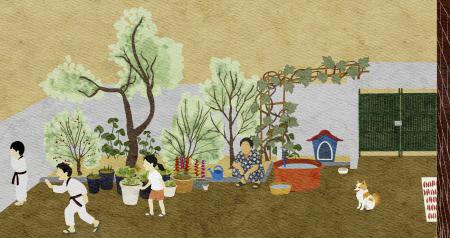
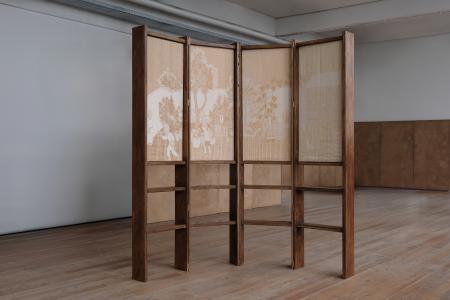
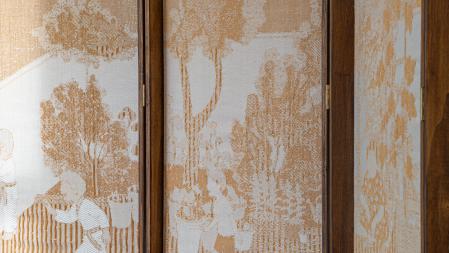
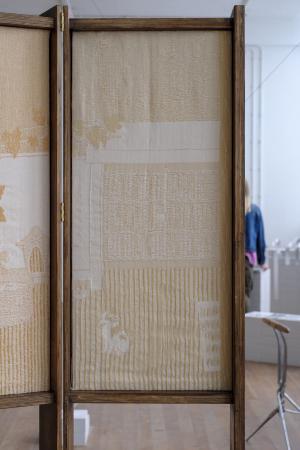
infoThis work explores the concept of an anthropological place—a location that has physically disappeared yet remains profoundly connected to those who once inhabited it. An anthropological place is more than a space occupied over time; it is richly layered with relationships, practices, and memories accumulated between people and their surroundings. Even when such places physically vanish, they continue to have a profound influence on individuals. Memories of a grandmother’s house, demolished during urban redevelopment, serve as a central motif in this work to articulate this idea. By gathering fragments of memory through family photographs and conversations with family members who remember the place, these collected memories are reconstructed into a new scene, blending reality with imagination. This process highlights how even an absent space can retain emotional and cultural resonance. The meanings derived from recalling a lost place extend beyond mere nostalgia. Through reflection, ways of living, relational sensibilities, and emotional experiences embedded within that space are revisited. Ultimately, these memories become foundational elements for imagining and creating new anthropological places in the present.
-
 info
infoSame project description as above.
-
 info
infoSame project description as above.
-
 info
infoSame project description as above.
-
 info
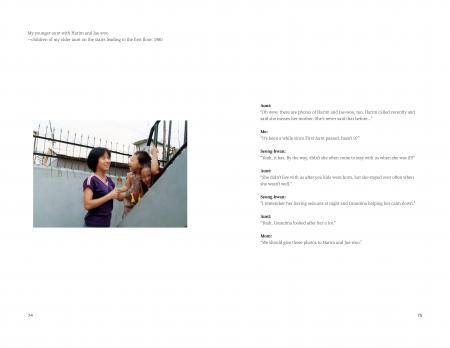
infoArtist book : memory archiving project
-
 info
infoOne archival record from the book
-
info
Concrete is one of the most widely used building materials and has a long history in the development of human civilization. It is an indispensable material for the construction of modern cities, and we can see it everywhere. Nowadays, a large number of reconstructions and redevelopments are constantly taking place in many cities, and we can often witness piles of concrete debris dumped in containers on the street. It is no longer a strange sight to us. Looking at these rubble pieces that were discarded after their lifespan, I realized that they are considered temporary objects that can easily be demolished and replaced by new ones. Concrete exists in human life only as long as its functional value is recognized. Numerous methods are being implemented to cope with the environmental problems surrounding concrete waste, and various attempts are being made to maintain its functional value through recycling. In my research on concrete waste, I shifted my focus 180 degrees away from functional value toward another, existential value. ‘Can these concrete fragments become part of a permanent landscape, changing over time, together with nature?’
-
 info
infoConcrete is one of the most widely used building materials and has a long history in the development of human civilization. It is an indispensable material for the construction of modern cities, and we can see it everywhere. Nowadays, a large number of reconstructions and redevelopments are constantly taking place in many cities, and we can often witness piles of concrete debris dumped in containers on the street. It is no longer a strange sight to us. Looking at these rubble pieces that were discarded after their lifespan, I realized that they are considered temporary objects that can easily be demolished and replaced by new ones. Concrete exists in human life only as long as its functional value is recognized. Numerous methods are being implemented to cope with the environmental problems surrounding concrete waste, and various attempts are being made to maintain its functional value through recycling. In my research on concrete waste, I shifted my focus 180 degrees away from functional value toward another, existential value. ‘Can these concrete fragments become part of a permanent landscape, changing over time, together with nature?’
-
![Abandoned concrete, Fragments of time - [1] Forgotten Place]( "Abandoned concrete, Fragments of time - [1] Forgotten Place") info
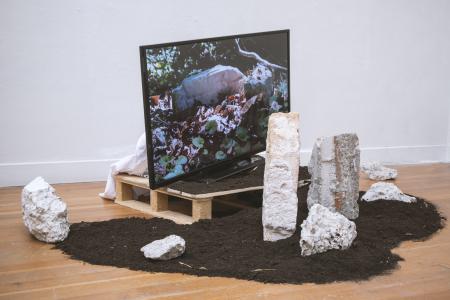
info[1] Archaeological Landscape of Concrete Fragments - 'Ruined, Emptiness, Silent but grandeur'
-
![Abandoned concrete, Fragments of time - [1] Forgotten Place]( "Abandoned concrete, Fragments of time - [1] Forgotten Place") info
info[2] Forgotten Place

![Abandoned concrete, Fragments of time - [1] Forgotten Place](https://api.mijn.stroom.nl/upload/thumb/816504dbf4bf0d7e040c4d672d4c11b0.jpg "Abandoned concrete, Fragments of time - [1] Forgotten Place")
![Abandoned concrete, Fragments of time - [1] Forgotten Place](https://api.mijn.stroom.nl/upload/thumb/00215964bdb0e6e9a313b31cad971bc5.jpg "Abandoned concrete, Fragments of time - [1] Forgotten Place")
Social media
Curriculum vitae
Education
-
2021 - 2025Interior Architecture and Furniture Design Den Haag, Koninklijke Academie van Beeldende Kunsten diploma
exhibitions
-
2025SOFT! Textile Art | September 10 - December 13 Rademakers Gallery Weesp, Netherlands Group