-
 info
info -
 info
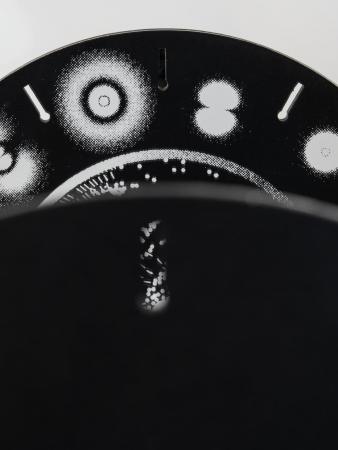
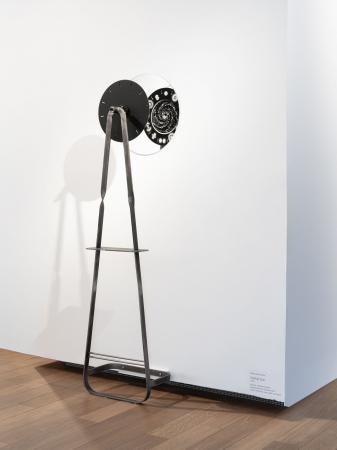
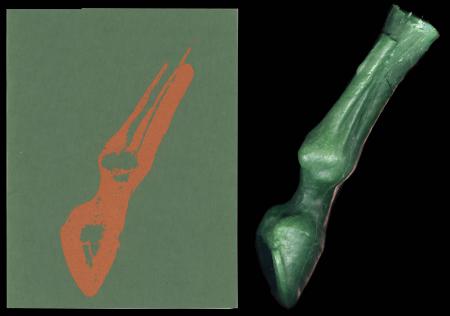
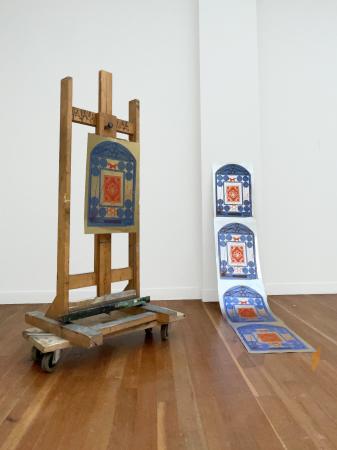
infoSculpture by Alexandra Hunts Graphic design by Stefaniia Bodnia From gallop to dot, from horse to atom, from measurement to responsibility. Hand-activated phenakistoscope shaped by questions of motion, scale, and power, built from hydrogen energy levels, gravitational fields, and the distant perspective of the pale blue dot.
-
 info
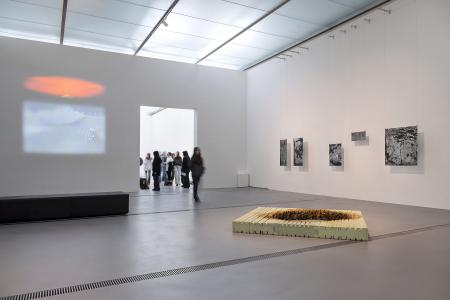
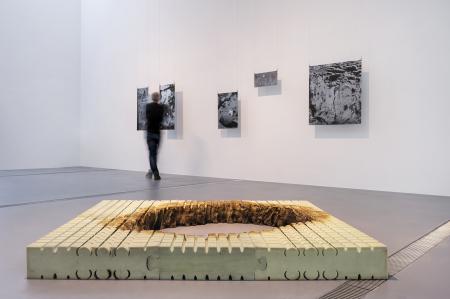
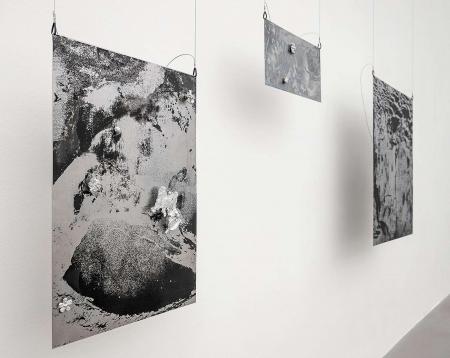
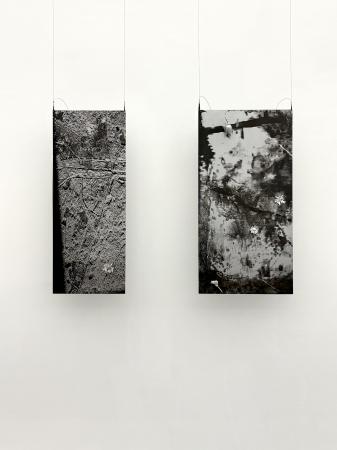
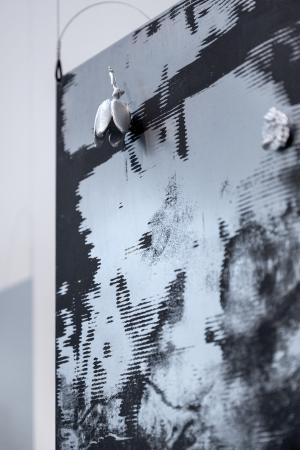
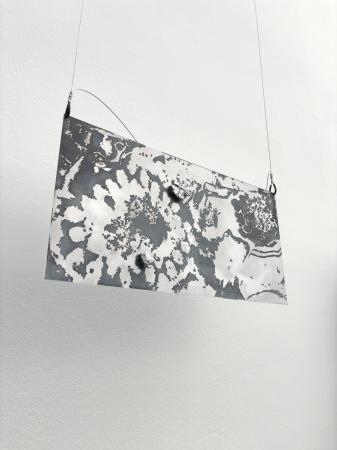
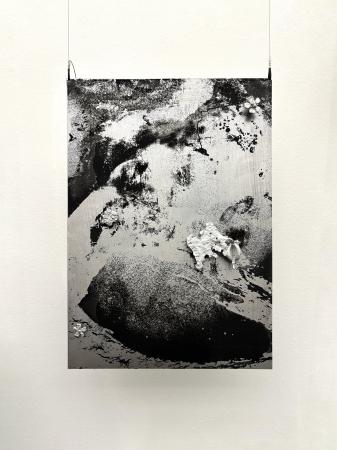
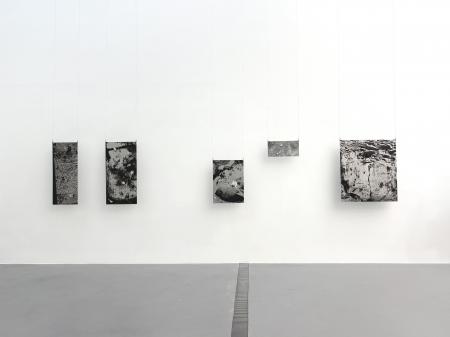
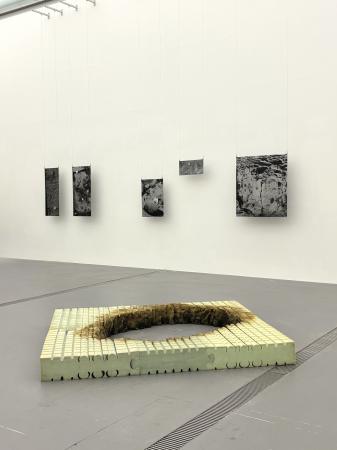
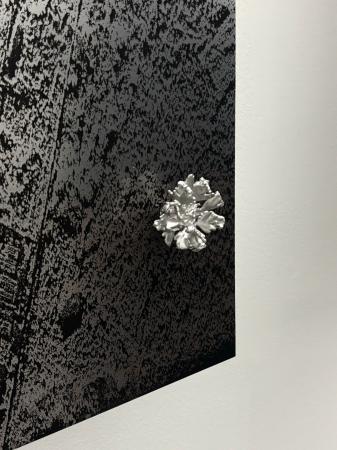
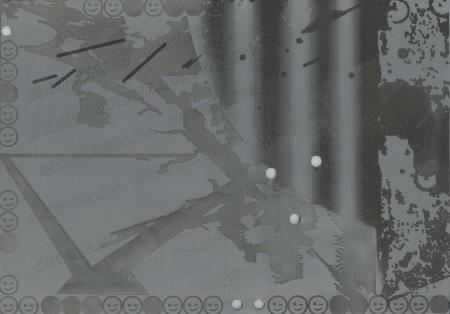
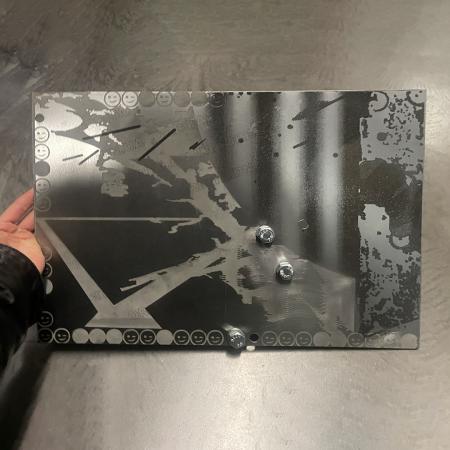
infoIn collaboration with Jack Dove. Like the layers of sediment peeled back during precious metal and mineral mining, war operations leave behind a perforated landscape, resulting in a porous structure with voids and encapsulated spaces within the layers of the land. Bodnia and Dove draw parallels between personal trauma and geotrauma, where the layers of geological formations intersect with vectors of power, embodying the violence of extractive practices and war. The imagery combines satellite views of the mining area in eastern Ukraine, where military operations take place above and below ground; engravings of mineral porosity, and performative drawings of landscape. These layers reveal the vertical continuum connecting the subterranean and the digital realms, linking mines to the cloud. The project gives a voice to materials, including minerals, land, non-human entities and human labour. All of these are seen as resources for the operations of power. Synthesized sounds and processed samples are constructed to move and distort the metal, placing reconstructions of unspoken memory into the steel while metal plates and sculptural elements are transformed into resonant instruments, allowing matter to speak.
-
 info
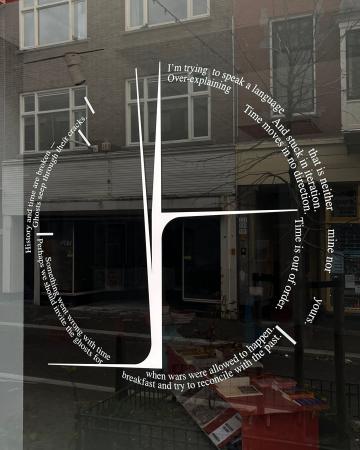
infoIn her Open Letter, Stefaniia reflects on moments when time slips, fractures, and allows ghosts to surface. Set in Times, the work draws on a metaphor inspired by Nothing bad has ever happened by Victoria Amelina—the Ukrainian writer and researcher who was killed in a Russian missile strike in Kramatorsk, in the region the artist calls home. In Amelina’s book, ghosts embody unresolved trauma and the persistent presence of the past. Through this reference, Stefaniia’s poem touches on the disorienting temporality of conflict, where language falters and history haunts the present.
-
 info
infoCollboration with Jack Dove
-
 info
infoCollboration with Jack Dove
-
 info
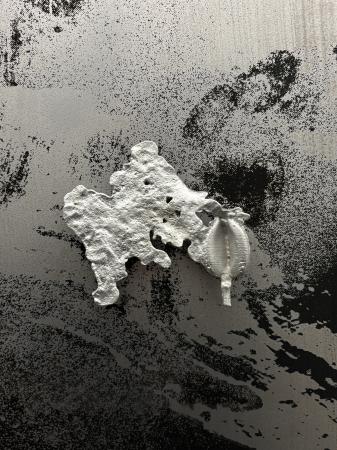
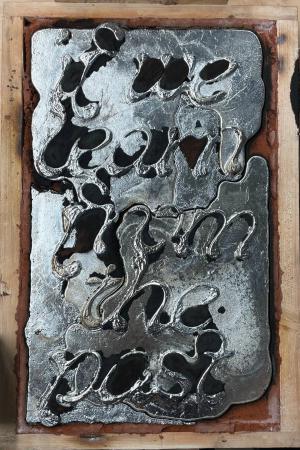
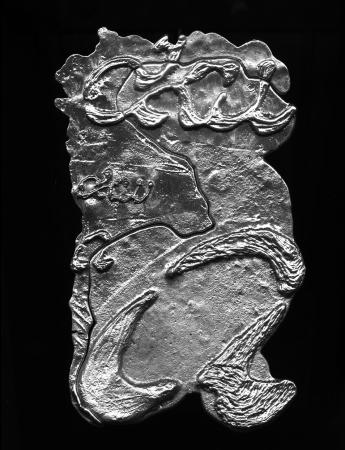
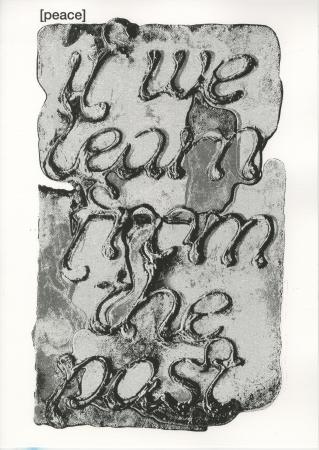
infoAluminium conceals time, voices and histories. It’s one of the most widely used materials in infrastructure, but also in military and ammo. We took melting as the main methodology to reshape the narrative and bring material to the new action. @stefabodnia developed lettering based on the properties of the material, using ligatures to connect all the letters formed by the process. We used aluminium scrap power cables for the production of the casting piece. In Ukraine, where there is only three hours of electricity per day, these cables play a crucial role in establishing connections.
-
 info
infoIn collaboration with Jack Dove. Like the layers of sediment peeled back during precious metal and mineral mining, war operations leave behind a perforated landscape, resulting in a porous structure with voids and encapsulated spaces within the layers of the land. Bodnia and Dove draw parallels between personal trauma and geotrauma, where the layers of geological formations intersect with vectors of power, embodying the violence of extractive practices and war. The imagery combines satellite views of the mining area in eastern Ukraine, where military operations take place above and below ground; engravings of mineral porosity, and performative drawings of landscape. These layers reveal the vertical continuum connecting the subterranean and the digital realms, linking mines to the cloud. The project gives a voice to materials, including minerals, land, non-human entities and human labour. All of these are seen as resources for the operations of power. Synthesized sounds and processed samples are constructed to move and distort the metal, placing reconstructions of unspoken memory into the steel while metal plates and sculptural elements are transformed into resonant instruments, allowing matter to speak.
-
 info
infoIn collaboration with Jack Dove. Like the layers of sediment peeled back during precious metal and mineral mining, war operations leave behind a perforated landscape, resulting in a porous structure with voids and encapsulated spaces within the layers of the land. Bodnia and Dove draw parallels between personal trauma and geotrauma, where the layers of geological formations intersect with vectors of power, embodying the violence of extractive practices and war. The imagery combines satellite views of the mining area in eastern Ukraine, where military operations take place above and below ground; engravings of mineral porosity, and performative drawings of landscape. These layers reveal the vertical continuum connecting the subterranean and the digital realms, linking mines to the cloud. The project gives a voice to materials, including minerals, land, non-human entities and human labour. All of these are seen as resources for the operations of power. Synthesized sounds and processed samples are constructed to move and distort the metal, placing reconstructions of unspoken memory into the steel while metal plates and sculptural elements are transformed into resonant instruments, allowing matter to speak.
-
 info
infoIn collaboration with Jack Dove. Like the layers of sediment peeled back during precious metal and mineral mining, war operations leave behind a perforated landscape, resulting in a porous structure with voids and encapsulated spaces within the layers of the land. Bodnia and Dove draw parallels between personal trauma and geotrauma, where the layers of geological formations intersect with vectors of power, embodying the violence of extractive practices and war. The imagery combines satellite views of the mining area in eastern Ukraine, where military operations take place above and below ground; engravings of mineral porosity, and performative drawings of landscape. These layers reveal the vertical continuum connecting the subterranean and the digital realms, linking mines to the cloud. The project gives a voice to materials, including minerals, land, non-human entities and human labour. All of these are seen as resources for the operations of power. Synthesized sounds and processed samples are constructed to move and distort the metal, placing reconstructions of unspoken memory into the steel while metal plates and sculptural elements are transformed into resonant instruments, allowing matter to speak.
-
 info
infoIn collaboration with Jack Dove. Like the layers of sediment peeled back during precious metal and mineral mining, war operations leave behind a perforated landscape, resulting in a porous structure with voids and encapsulated spaces within the layers of the land. Bodnia and Dove draw parallels between personal trauma and geotrauma, where the layers of geological formations intersect with vectors of power, embodying the violence of extractive practices and war. The imagery combines satellite views of the mining area in eastern Ukraine, where military operations take place above and below ground; engravings of mineral porosity, and performative drawings of landscape. These layers reveal the vertical continuum connecting the subterranean and the digital realms, linking mines to the cloud. The project gives a voice to materials, including minerals, land, non-human entities and human labour. All of these are seen as resources for the operations of power. Synthesized sounds and processed samples are constructed to move and distort the metal, placing reconstructions of unspoken memory into the steel while metal plates and sculptural elements are transformed into resonant instruments, allowing matter to speak.
-
 info
infoIn collaboration with Jack Dove. Like the layers of sediment peeled back during precious metal and mineral mining, war operations leave behind a perforated landscape, resulting in a porous structure with voids and encapsulated spaces within the layers of the land. Bodnia and Dove draw parallels between personal trauma and geotrauma, where the layers of geological formations intersect with vectors of power, embodying the violence of extractive practices and war. The imagery combines satellite views of the mining area in eastern Ukraine, where military operations take place above and below ground; engravings of mineral porosity, and performative drawings of landscape. These layers reveal the vertical continuum connecting the subterranean and the digital realms, linking mines to the cloud. The project gives a voice to materials, including minerals, land, non-human entities and human labour. All of these are seen as resources for the operations of power. Synthesized sounds and processed samples are constructed to move and distort the metal, placing reconstructions of unspoken memory into the steel while metal plates and sculptural elements are transformed into resonant instruments, allowing matter to speak.
-
 info
infoThe type design reflecting on the liquid material forms of language.
-
 info
infoIn collaboration with Jack Dove. Like the layers of sediment peeled back during precious metal and mineral mining, war operations leave behind a perforated landscape, resulting in a porous structure with voids and encapsulated spaces within the layers of the land. Bodnia and Dove draw parallels between personal trauma and geotrauma, where the layers of geological formations intersect with vectors of power, embodying the violence of extractive practices and war. The imagery combines satellite views of the mining area in eastern Ukraine, where military operations take place above and below ground; engravings of mineral porosity, and performative drawings of landscape. These layers reveal the vertical continuum connecting the subterranean and the digital realms, linking mines to the cloud. The project gives a voice to materials, including minerals, land, non-human entities and human labour. All of these are seen as resources for the operations of power. Synthesized sounds and processed samples are constructed to move and distort the metal, placing reconstructions of unspoken memory into the steel while metal plates and sculptural elements are transformed into resonant instruments, allowing matter to speak.
-
 info
infoIn collaboration with Jack Dove. Like the layers of sediment peeled back during precious metal and mineral mining, war operations leave behind a perforated landscape, resulting in a porous structure with voids and encapsulated spaces within the layers of the land. Bodnia and Dove draw parallels between personal trauma and geotrauma, where the layers of geological formations intersect with vectors of power, embodying the violence of extractive practices and war. The imagery combines satellite views of the mining area in eastern Ukraine, where military operations take place above and below ground; engravings of mineral porosity, and performative drawings of landscape. These layers reveal the vertical continuum connecting the subterranean and the digital realms, linking mines to the cloud. The project gives a voice to materials, including minerals, land, non-human entities and human labour. All of these are seen as resources for the operations of power. Synthesized sounds and processed samples are constructed to move and distort the metal, placing reconstructions of unspoken memory into the steel while metal plates and sculptural elements are transformed into resonant instruments, allowing matter to speak.
-
 info
infoIn collaboration with Jack Dove. Like the layers of sediment peeled back during precious metal and mineral mining, war operations leave behind a perforated landscape, resulting in a porous structure with voids and encapsulated spaces within the layers of the land. Bodnia and Dove draw parallels between personal trauma and geotrauma, where the layers of geological formations intersect with vectors of power, embodying the violence of extractive practices and war. The imagery combines satellite views of the mining area in eastern Ukraine, where military operations take place above and below ground; engravings of mineral porosity, and performative drawings of landscape. These layers reveal the vertical continuum connecting the subterranean and the digital realms, linking mines to the cloud. The project gives a voice to materials, including minerals, land, non-human entities and human labour. All of these are seen as resources for the operations of power. Synthesized sounds and processed samples are constructed to move and distort the metal, placing reconstructions of unspoken memory into the steel while metal plates and sculptural elements are transformed into resonant instruments, allowing matter to speak.
-
 info
infoPublication. Texts and horse leg wax casting by Alexandra
-
 info
info -
 info
info -
 info
info -
 info
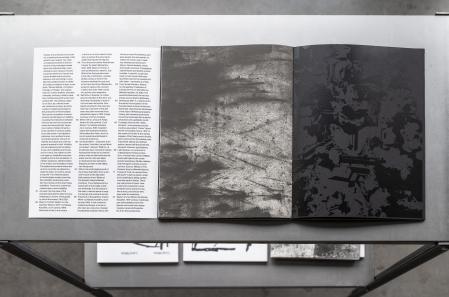
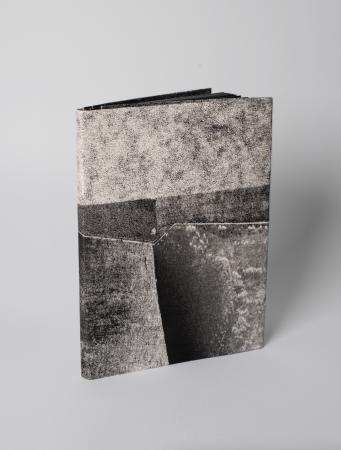
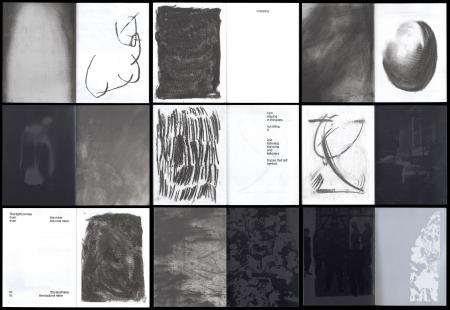
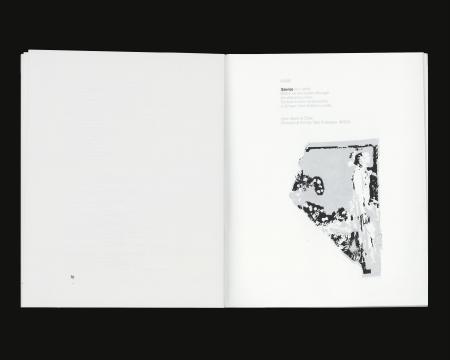
infoThe book explores the history of mining and industrialisation in the Donetsk and Luhansk regions of Ukraine. It draws on a rich collection of images and documents sourced from Belgian and Ukrainian archives, including paintings, drawings, and grassroots photography. Among the featured works are Nikolay Kasatkin’s 1880s paintings of Donbas coal mining, which vividly portray the industrial transformation and the hidden, subterranean world where mining takes place, beyond the reach of human vision. Kasatkin paints the picture black, withholding the vision of the industrial workforce and political decisions. In this publication, the invisible voices of those reduced to mere material are brought to light, using my body as a narrative tool. Through a combination of poetry and charcoal drawings, the body is portrayed as more than just a resource, with the narrative unfolding as a piece of charcoal gradually exhausted across the pages.
-
![]() info
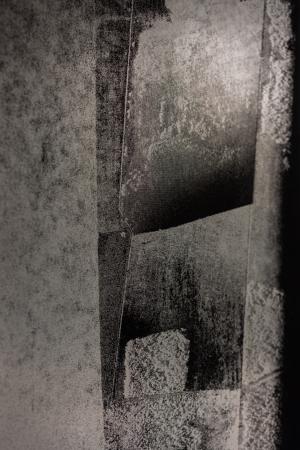
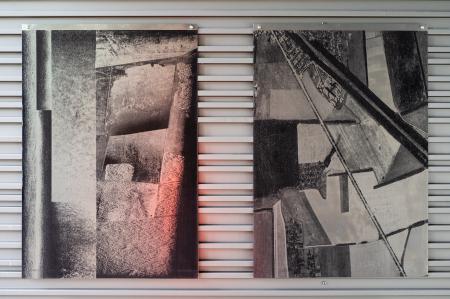
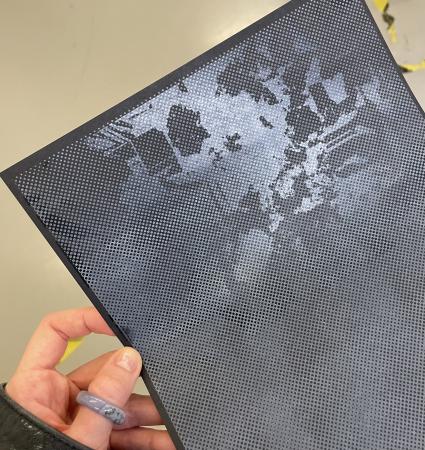
infoThe multi-faceted research project provides insight into the poignant landscape of war-affected south-eastern Ukraine and sets out to theorise the complicity of resources as participants that influence and register instances of (geo-political) conflict. The project focuses on industrial colonisation of Donbas region in Ukraine through the lens of visual technologies such as drone and satellite imagery, adding a new layer of understanding in a wartime context. The left image is a charcoal drawing of a landscape, while the right one is satellite footage of the Kreminna Mine, a mining area in the Donbas region, provided by a friend working for Ukrainian Intelligence. The satellite image was made to investigate activities on the land. This juxtaposition imprinted with charcoal ink highlights the material relationship between the human body, mined material, and geopolitics merging in one landscape.
-
 info
infoThe multi-faceted research project provides insight into the poignant landscape of war-affected south-eastern Ukraine and sets out to theorise the complicity of resources as participants that influence and register instances of (geo-political) conflict. The project focuses on industrial colonisation of Donbas region in Ukraine through the lens of visual technologies such as drone and satellite imagery, adding a new layer of understanding in a wartime context. The left image is a charcoal drawing of a landscape, while the right one is satellite footage of the Kreminna Mine, a mining area in the Donbas region, provided by a friend working for Ukrainian Intelligence. The satellite image was made to investigate activities on the land. This juxtaposition imprinted with charcoal ink highlights the material relationship between the human body, mined material, and geopolitics merging in one landscape.
-
 info
infoThe book explores the history of mining and industrialisation in the Donetsk and Luhansk regions of Ukraine. It draws on a rich collection of images and documents sourced from Belgian and Ukrainian archives, including paintings, drawings, and grassroots photography. Among the featured works are Nikolay Kasatkin’s 1880s paintings of Donbas coal mining, which vividly portray the industrial transformation and the hidden, subterranean world where mining takes place, beyond the reach of human vision. Kasatkin paints the picture black, withholding the vision of the industrial workforce and political decisions.
-
 info
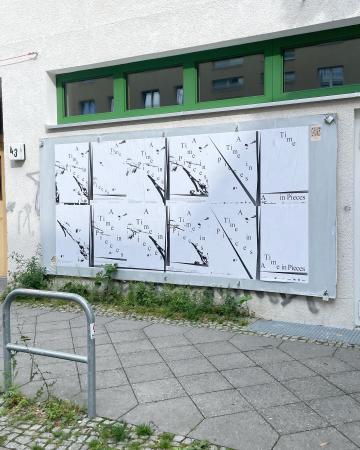
infoWhen a historical moment falls apart – into something unforeseen, something disparate, something intricate – we witness a divergence in the flow of time. The present starts to flicker, exposing and bursting the seams of reality. The gravity of the moment takes over entirely. Time becomes a fossil, an enduring and persistent ‘now’. The poster project for "A Time in Pieces" encapsulates its concept through the deliberate glitch of a riso printer, with the ink impressions of a misprint on paper scanned and composed into a visual narrative across 12 A1 posters. Framed by three arrows breaking away from their circular path, the design symbolises disruption. The use of Times font further enhances the poster's timeless quality.
-
 info
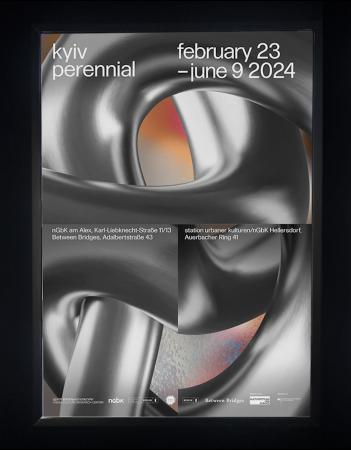
infoMetal wires and knots serve as symbols of transformation and resistance amidst the chaos of an ongoing war. As they morph into various shapes, merge and take on different configurations for each exhibition held in different European cities, they parallel the evolving nature of the Biennale itself. Kyiv Perennial's poster weaves together disparate impressions, creating a seamless tapestry of shared artistic manifestation, strength and resilience expressed in the metal knots.
-
 info
infoThe book explores the history of mining and industrialisation in the Donetsk and Luhansk regions of Ukraine. It draws on a rich collection of images and documents sourced from Belgian and Ukrainian archives, including paintings, drawings, and grassroots photography. Among the featured works are Nikolay Kasatkin’s 1880s paintings of Donbas coal mining, which vividly portray the industrial transformation and the hidden, subterranean world where mining takes place, beyond the reach of human vision. Kasatkin paints the picture black, withholding the vision of the industrial workforce and political decisions.
-
 info
infoThe book explores the history of mining and industrialisation in the Donetsk and Luhansk regions of Ukraine. It draws on a rich collection of images and documents sourced from Belgian and Ukrainian archives, including paintings, drawings, and grassroots photography. Among the featured works are Nikolay Kasatkin’s 1880s paintings of Donbas coal mining, which vividly portray the industrial transformation and the hidden, subterranean world where mining takes place, beyond the reach of human vision. Kasatkin paints the picture black, withholding the vision of the industrial workforce and political decisions.
-
 info
infoPochen Biennale 2024, Chemnitz
-
 info
infoIn collaboration with Alexandra Hunts
-
 info
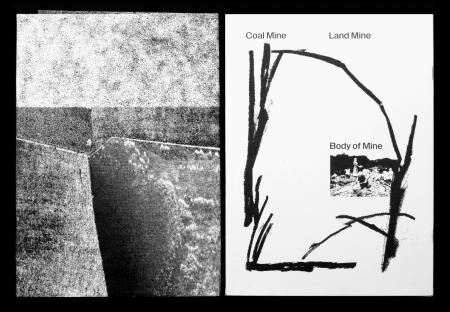
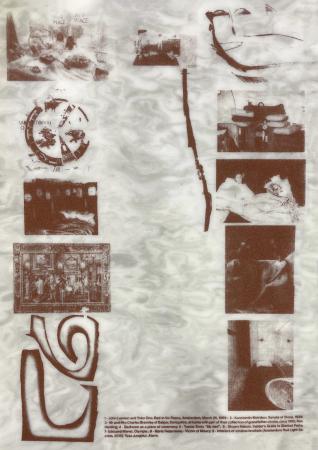
infoThe publication, “Coal Mine, Land Mine, the Body of Mine”, is a personal and poetic reflection on Ukrainian identity, history, ecology and embodied memory, set in the context of Eastern Ukraine, my home region. Through poetic storytelling and experimental printmaking, it aims to raise awareness of and encourage critical rethinking of imperial narratives in Europe and current Russo-Ukrainian war. It highlights the connection between personal tragedy and global politics by juxtaposing images from European archives depicting the industrialisation of Eastern Ukraine in the 20th century and personal narratives in the form of drawings and poems
-
 info
infoThe publication, “Coal Mine, Land Mine, the Body of Mine”, is a personal and poetic reflection on Ukrainian identity, history, ecology and embodied memory, set in the context of Eastern Ukraine, my home region. Through poetic storytelling and experimental printmaking, it aims to raise awareness of and encourage critical rethinking of imperial narratives in Europe and current Russo-Ukrainian war. It highlights the connection between personal tragedy and global politics by juxtaposing images from European archives depicting the industrialisation of Eastern Ukraine in the 20th century and personal narratives in the form of drawings and poems
-
 info
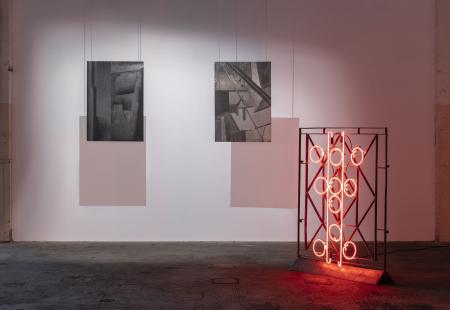
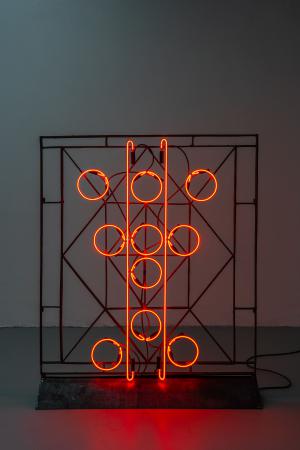
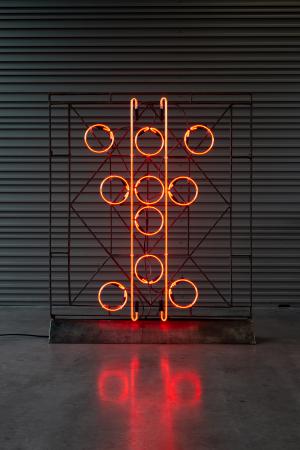
infoProject explores the multifaceted history and evolving significance of neon gas. Highlighting neon's journey from its natural abundance in the universe to its pivotal role in scientific advancements and geopolitical shifts, the work juxtaposes its past and present uses. Initially invisible, neon gas glows red when electrified, a phenomenon that found commercial appeal in advertising signs in the West. Central to the piece are ten illuminated electrons, representing neon's atomic structure, set against a backdrop steel structure of a found window grille from the turbulent 90’s in Ukraine and serves as a metaphor for the era's industrial and political upheaval. The Soviet Union's Cold War investments in neon gas for space-bound laser weapons left a legacy that extends into today's high-tech industries and shaped Ukrainian landscape. The 2022 Russian invasion of Ukraine, which disrupted nearly half of the global neon supply by shutting down major production plants in Odessa and Mariupol, underscores the fragility of these interconnected systems. The work tries to encapsulates the shift of neon's purpose—from a tool of military ambition to a cornerstone of semiconductor manufacturing—while inviting viewers to ponder the ethical complexities of technological progress and its enduring impact on our world. Through these contrasts, the project prompts reflection on the lasting impacts of Soviet industrialization, ecological damage, and the complex ethical considerations entwined with scientific progress and political change.
-
 info
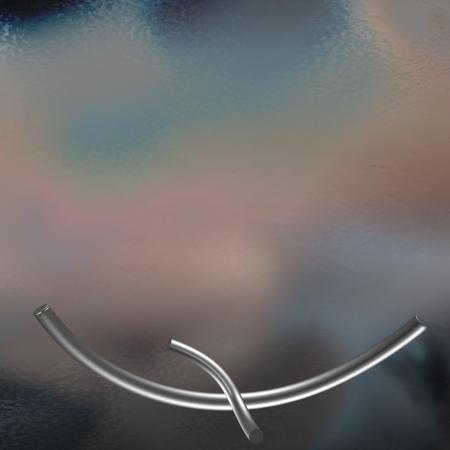
infoAs part of the visual communication for Kyiv Biennial '23, a series of posters was developed in collaboration with Aliona Ciobanu for exhibitions held in Kyiv, Ivano-Frankivsk, Uzhhorod, Warsaw, Lublin, Antwerp, and Vienna. Metal wires and knots serve as symbols of transformation and resistance amidst the chaos of an ongoing war. As they morph into various shapes, merge and take on different configurations for each exhibition held in different European cities, they parallel the evolving nature of the Biennale itself. Kyiv Biennial's visual communication weaves together disparate impressions, creating a seamless tapestry of shared artistic manifestation, strength and resilience expressed in the metal knots.
-
 info
infoMetal wires and knots serve as symbols of transformation and resistance amidst the chaos of an ongoing war. As they morph into various shapes, merge and take on different configurations for each exhibition held in different European cities, they parallel the evolving nature of the Biennale itself. Kyiv Perennial's poster weaves together disparate impressions, creating a seamless tapestry of shared artistic manifestation, strength and resilience expressed in the metal knots.
-
 info
infoPolyester Palace is using the topic of bed as a lens to explore a topic of labor. By focusing on the use of a soft object like a polyester mattress, the publication is able to offer insights into the ways in which our relationship with work and leisure is evolving in the 21st century.
-
 info
infoFrom a series of drawings reflecting the experience of fleeing.
-
 info
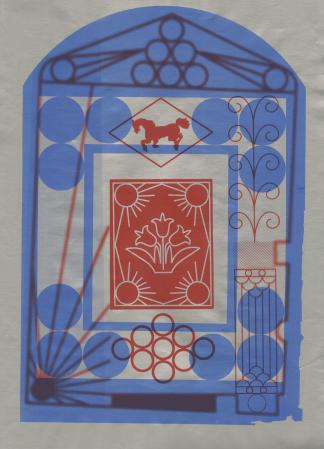
infoThe content of the poster appears to feature symbols, protective amulets collected from the fences of villages in Ukraine.
-
 info
infoThe content of the poster appears to feature symbols, protective amulets collected from the fences of villages in Ukraine.
-
 info
infoPolyester Palace is using the topic of bed as a lens to explore a topic of labor. By focusing on the use of a soft object like a polyester mattress, the publication is able to offer insights into the ways in which our relationship with work and leisure is evolving in the 21st century.
-
 info
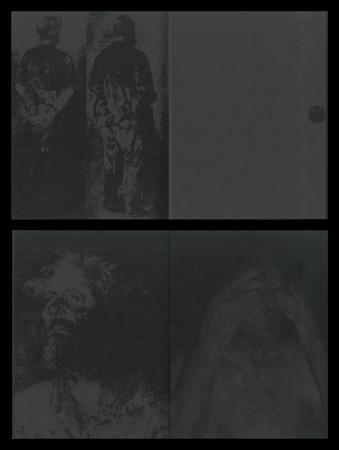
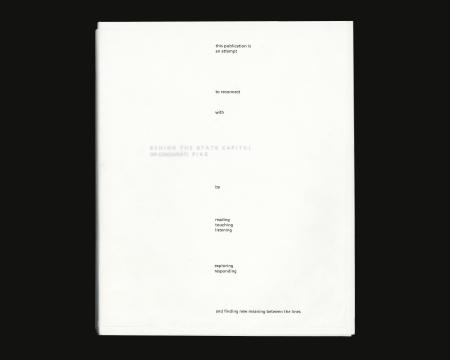
infoThis publication is a revival of Behind the State Capitol or Cinnaty Pike by queer american poet John Wienners. This book is based on its expirience, an examination of the medium of the poem, rhythm, white space, acoustic characteristics of the words on the paper reproduced in two interpretations: Wieners’ and the editor’s. The paired images hidden in the French folding feel rough, layering the original and the interpretation. Light and heavier, greyish types of paper alternate in different rhythms and voices of the content. The repetitive comparison of authentic and experienced poetry directs the dynamic of linear narration of two voices throughout the book.
-
 info
infoThis publication is a revival of Behind the State Capitol or Cinnaty Pike by queer american poet John Wienners. This book is based on its expirience, an examination of the medium of the poem, rhythm, white space, acoustic characteristics of the words on the paper reproduced in two interpretations: Wieners’ and the editor’s. The paired images hidden in the French folding feel rough, layering the original and the interpretation. Light and heavier, greyish types of paper alternate in different rhythms and voices of the content. The repetitive comparison of authentic and experienced poetry directs the dynamic of linear narration of two voices throughout the book.
-
 info
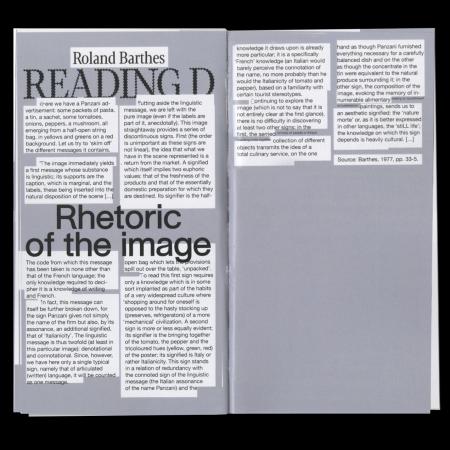
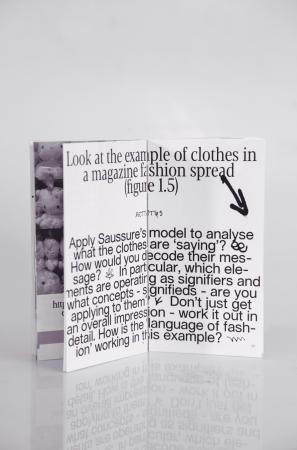
info“Representation is the production of the meaning of the concepts in our minds through language“. While the book is primarily focused on the production of meaning through language, it also touches on other aspects of semiotics, such as the role of visual images in shaping our understanding of the world.
-
 info
info“Representation is the production of the meaning of the concepts in our minds through language“. While the book is primarily focused on the production of meaning through language, it also touches on other aspects of semiotics, such as the role of visual images in shaping our understanding of the world.
-
 info
info -
 info
info
Collaboration
Social media
Member of Artists’ Initiative/Collective/Incubator
Uzvar Collective
Curriculum vitae
Education
-
2020 - 2024Graphic Design Den Haag, Koninklijke Academie van Beeldende Kunsten diploma
-
2018 - 2020Graphic Design National Academy of Visual Arts and Architecture, Kyiv, Ukraine
exhibitions
-
2026We Carried Soil with Us TROEF Leiden , Netherlands Group
-
2026A Bird That Cannot Land KW Institute for Contemporary Art Berlin , Germany In a context of growing conflicts and shifting political realities, A Bird That Cannot Land centers on the notion of a “Middle-East-Europe” and its histories of coloniality and imperialism. By expanding the scope of the Kyiv Biennial and linking post-Soviet Europe with the Baltics, Central and Southwest Asia, and the Mediterranean, the exhibition and its live and discursive programs aim to open space for listening to interconnected pasts and presents, and for rethinking how geographies, histories, and realities are told and perceived. www.kw-berlin.de/en/exhibitions/6th-kyiv-biennial-a-bird-that-cannot-land Group
-
2025Messages from Another Borderless Zone European Capital of Culture 2025, Xcenter Nova Gorica , Slovenia www.go2025.eu/en/whats-up/events/messages-from-another-borderless-zone Group
-
2025Dummy Award Penumbra Foundation New York, United States Group
-
2025Dummy Award Rencontres Arles Arles, France Group
-
2025TDC 71st Annual Competition Exhibition Fordham University New York, United States Group
-
2025Vertical Horizon Kyiv Biennial, Lentos Museum Linz, Austria Landscape is not just a physical environment, but a powerful visual language that can express, sustain and reproduce territorial and national identity. It is an important part of how a state and its citizens perceive themselves and how they present themselves to the world. “Since the Neolithic beginning, Power has been raising itself into verticality. From high positions a dominant perspective can be constructed, since from there a large view over the low place is possible.” Looking at the landscape as a visual form of organizing power, captured in painting, photography, and other media, we observe a gradual and ever-deepening human penetration into it. Vertical Horizon exhibition is based on the notion of land and landscape as a poetic and political agency, alongside its technological perception and exploitation, and the influence of warfare on the land and its visual and artistic representations. Highlighting the shift from the geopolitics of the surface to the political geology of the vertical, it will trace the evolution of landscape as the visual basis of territorial or nation-state identity, through the marking of borders and possessions, to the technologically armed extractivist observation of the earth's depths by both national and transnational agents of power. The landscape ceases to be solely a surface phenomenon, acquiring a vertical dimension where power and control extend from outer space to deep subterranean horizons still residing on the constitutive procedure of observation. After the Second World War the landscape was observed through the enhanced optics of jet fighters and satellites, night vision devices, human-operated drones, homing and heat-targeted armor, neural network modes of visual perception, and other advanced machinery. The newly developed technology was aimed at increasing the effectiveness of penetrating the natural landscape while pursuing extractivist goals and launching military operations, reflecting an increasingly alienated relationship to the Earth, marked by logic of violence and exploitation. How can we think planetary in the shadow of war? How to confront the ontological power of the vertical? How to preserve a human dimension of the landscape? Vertical Horizon seeks critical reflections on these themes, inviting explorations of the planetary dimensions of war, migration geographies, military technologies, black earth poetics and new chtonic mythology. Through the fieldwork, artistic reflection and cross-discip www.lentos.at/en/exhibitions/kyiv-biennale-2025 Group
-
2024Ex Oriente Ignis Pochen Biennale Chemtitz, Germany The project “Light is not Dark Enough” is part of “Ex Oriente Ignis” (translated from Latin: "The Fire Comes From the East") exhibition curated by Serge Klymko at the Pochen Biennale 2024. In the shadow of the Russian aggression war against Ukraine and at a moment of "epochal change," an artistic center for ruptures, fragility, relics worth protecting and possible future scenarios emerges in the Eastern German experiential space. The exhibitions will take place from 26 September 2024 in over 2000 m² in several halls on the Wirkbau site. The media art exhibition, curated by Serge Klymko (Kyiv), featuring 20 international positions, and the participatory youth exhibition, curated by Amt für Wunschentwicklung (Halle/Saale), make Chemnitz a hub for existential artistic and societal debates. The comprehensive accompanying and educational programme focuses on current discourses of Central and Eastern European present and future. It engages local communities and partners to promote accessibility to the thematic complexity. www.pochen.eu/ Group
-
2024WIP at Paradise Pre-grad show of Graphic Design students of KABK The Hague, Netherlands Presentation of research for the publication "Coal Mine, Land Mine, and Body of Mine", including a series of drawings, text, poems, publication and projection. Group
-
2024Vechirka Vechirka at Snack Amsterdam, fundraising event Amsterdam, Netherlands Russian aggression puts in danger the lives of Ukrainian people, animals, land and cultural heritage. With open hearts and raised fists our firm goal is to help those affected by the war — those who stayed and those who found refuge in other countries. Our vision is independent and thriving democracy and freedom in Ukraine. Our practice — direct support responding to specific needs. We are a group of Ukrainians and internationals volunteering and collecting money to provide humanitarian aid, sponsor water deliveries to occupied zones of Ukraine, support animal shelters, buy basic supplies e.g. helmets or tactical clothing for our friends and relatives who selflessly defend Ukraine on the frontline. Vechirka (in Ukrainian: an evening party) is a fundraising event during which you can enjoy and buy art made by our friends, sway to the music, and appreciate snacks — all proceeds will be distributed for help for those suffering due to war. Inside the snack machine is a collection of postcards by Stefaniia Bodnia, which reflect stories told by the artist’s mother, whom escaped the Russian occupation and bombardment of Mariupol, her home town. Lenticular postcards were chosen to capture the liminality faced by people displaced by war, who fluctuate between personal and collective, trauma and hope. snacksamsterdam.nl/editions/8/ Group
-
2024Punctuations Graduation Show 2024 at the Royal Academy of Art The Hague The Hague , Netherlands For the Graduation show 2024 at KABK Stefaniia Bodnia presents the project "Coal Mine, Land Mine, Body of Mine". "I remember the black snow covering my yard every year at night in Mariupol. A brittle crust of black patina that I always longed to break by making the first white footprints. The obscure black particles have no taste or smell, they tint the surface of the snow-covered landscape while remaining invisible. It settles into the human and non-human bodies, leaving an intangible presence expressed in its instantly unseen gradual transformation. The black snow is a metaphor for industrial emissions from metallurgical and chemical production and mining in the Donetsk and Luhansk regions of Ukraine, where flames currently descend from the sky onto the soil. The multi faceted project provides insight into the post-industrial landscape of war-affected eastern Ukraine and illuminates the voices of the materials extracted from this region: coal, salt, gas, neon, and the human body. The story unfolds in several chapters, each dedicated to narration about a particular material. It traces the chain of extraction, starting with coal mining in the region, followed by black metallurgy, and with the production of neon as a by-product of the iron and steel industry." graduation.kabk.nl/2024/stefaniia-bodnia Group
-
2023Love is in the Air Group exhibition 'Love is in the Air' Den Haag, Netherlands The group exhibition Love is in the Air organized by KABK’s Design Research students fills exhibition space as Laak with sounds, moving images, and installations, all to manifest love in all its forms. Within the exhibition, the participants explored the theme ‘Love & the Erotic’. Drawing from thoughts of Audre Lorde, adrienne maree brown, and bell hooks, they’ve asked: What if we celebrate the erotic in all aspects of our lives? What if we were to begin our activities with a love ethic? What if the erotic, pleasure, and love become the primary incentives for our design practices; for our political actions, how we interact with and care for our environment, and how we build our commune? To fill the cracks of our alienated and individualized lives,Love is in the Air welcomes you to a lush and plentiful ecosystem of love stories. This earthly paradise created with passionate and devoted labor becomes a lovescape open for observation, contribution, and interpretation. It invites you to explore the erotic as a source of power and to recognize our need for an abundance of love: deep, soft, drippin’, hot, wild, practiced, collectivized, cultured, radical, and fearless love. Group
-
2023Podarunok Charity event 'Podarunok', in support of Ukraine with film screening at De School in Amsterdam Amsterdam, Netherlands Charity event organised by Collect4Ukraine and movie screening of the film 'Recipes of Displacement' made with Uzvar collective sharing the lived experiences of those who have fled the Russian invasion of Ukraine in February 2022. Group
-
2022"Those Amongst Us" at Plant Fiction Studio Dutch Design Week Eindhoven , Netherlands Those Among Us features a series of shorts, performances and installations, cultivating a space for collaborative knowledge production about the lived experiences of people who have fled the Russian invasion of Ukraine. Fleeing their homes, they share their lived experiences The escalation of the Russian war in Ukraine marked by the full-scale invasion of February 2022 caused an influx of persons seeking safety in the Netherlands. Amongst them, Ukrainians and people of different nationalities who have studied, worked, and lived their everyday lives in Ukraine. Sharing their lived experience of escaping the horrors of war created peculiar and heterogeneous 'refugee communities'. These communities, differing in language, religion, ethnicity - often enrich each other and open up a discussion around what constitutes the Ukrainian cultural identity. Circulating the orbit of these discussions are local volunteers from Eindhoven, Amsterdam and the Hague, who have come together in a showcase of solidarity and mutual support. Those Among Us is a curated experience that feature stories of individuals from these communities, of life here and of far away. These stories are told in a series of mediums and feature points of interaction where the public can experience elements of Ukrainian culture. Crucially, the stories highlight resilience and innovation that stem from ground up, revealing how volunteer goodwill have plugged systemic gaps in the refugee policy. Those Among Us is co-organised by volunteers with people who have fled the war in Ukraine The project adopts methods of interviews and online ethnography, as well as drawing on volunteer experiences, some of whom are Ukrainians themselves. It is an attempt at creating space for collaborative knowledge production about the lived experiences of people who have fled the Russian invasion. Crucially, the project follows and continues from a series of events that raise public awareness around the war in Ukraine and its reverberations felt in the Netherlands. The project also features a food performance and an amount of proceeds will go to a designated charity of choice. This edition of Those Amongst Us at DDW22 is co-organised by Uzvar Collective (NL/UKR) - a group of KABK students, and Collect4Ukraine (NL/UKR) - based in Amsterdam, and Plant Fictions. ddw.nl/en/programme/8045/those-among-us Group
-
2021Drawing Appreciation Day Drawing Appreciation Day The Hague, Netherlands Artist initiative Hgtomi Rosa is a guest at …ism project space for an exhibition in which drawing is central. The project stems from the interest in drawing as a practice and the appreciation for people who use drawing in their lives. Hgtomi Rosa has invited 30 artists to show one drawing. The drawings may differ in size, function, age and success. They can be sketches, explanations, maps with routes on them, instructions, childhood drawings, spontaneous or substantial visual thoughts, drawings that were made to share with other people or a perfectly finished work of art. The artists respond to each other’s drawings through comments, written thoughts and interpretations. In this way the drawings are connected with each other as an expression of thought in image and word. And displayed within the physical space that …ism offers as a space for new thoughts. Your attendance is being valued as a contribution to Drawing Appreciation Day. Group
-
2021Unmuted: Can you see my screen? KABK Graphic Design in Het HEM: UNMUTED Amsterdam UNMUTED shows the work of the graphic designers from the Royal Academy of Art, The Hague (KABK). The Bachelor Graphic Design and the Master Non Linear Narrative departments of the KABK consist of inquisitive designers who are aware of our current times. They are familiar with both traditional and new media. These designers want to play a meaningful role in society and in the ever-expanding field of activity of the creative sector. In the HEM, they will show their groundbreaking, most current and urgent work as a reflection on today's dizzying world. Art education in 2020-2021 At the beginning of March 2020, all art academies faced the trials and tribulations of online teaching and digital final exams. UNMUTED responds to the desire of creators to show their work to the world. The creators now step out of the digital habitat, show their work and talk about it in a radio show in Het HEM. UNMUTED offers space to all members of the international and diverse community. Organisation UNMUTED is an initiative of the department of Bachelor Graphic Design of the Koninklijke Academie voor Beeldende Kunsten (KABK) Participants: Abel van As, Agnar Freyr Stefánssonn, Alexandra Superson, Alice Vink, Aliona Ciobanu, Amber de Ronde, Amber Meekel, Balázs Milánik, Camila Chebez, Camilla Kövecses, Charlotte van Alfen, Dans Jirgensons, Dawun Chung, Emir Karyo + Jan Wojda, Hilal Mutluel, Hyeonjeong, Jack Oomes, Jacky, Jannie Guo, Jenny Konrad, Julia Olijkan, Katerina Pravdova, Kelly Martijn, Lara Dautun + Basia Strzeżek + Samuel Salminen, Loïs van Spijk, Louis Braddock Clarke + Roosje Klap + Zuzanna Zgierska, Lucas M Franco, Lulu van Dijck, Luna van Schadewijk, María Rivero Gonzalez Martin Lorenz + Lupi Asensio + Julien Arts, Matas Buckus, Niam Madlani, Niels Otterman, Petra Ereos, Renata Sidorenko, Ro Antia, Rob van den Nieuwenhuizen, Robin Wielink, Rocío Amapola, Simonida Savic, Sofia Nikolaeva, Sonya Umanskaia, Stefaniia Bodnia, Trang Quynh Le, Waleed Al-Ward, Yara Fransen, Yeeun Kim hethem.nl/en/Het-Hem/Calendar/2021/06/KABK-Graphic-Design-In-Het-HEM-UNMUTED?modal_parent_path=Het-Hem%2FCalendar Group
Projects
-
2025
Echoes on porous ground Kyiv Biennial Collaboration with Jack Dove. Like the layers of sediment peeled back during precious metal and mineral mining, war operations leave behind a perforated landscape, resulting in a porous structure with voids and encapsulated spaces within the layers of the land. The audio visual work draws parallels between personal trauma and geotrauma, where the layers of geological formations intersect with vectors of power, embodying the violence of extractive practices and war. The imagery combines satellite views of the mining area in eastern Ukraine, where military operations take place above and below ground; engravings of mineral porosity, and performative drawings of landscape. These layers reveal the vertical continuum connecting the subterranean and the digital realms, linking mines to the cloud. The project gives a voice to materials, including minerals, land, non-human entities and human labour. All of these are seen as resources for the operations of power. Synthesized sounds and processed samples are constructed to move and distort the metal, placing reconstructions of unspoken memory into the steel while metal plates and sculptural elements are transformed into resonant instruments, allowing matter to speak.
-
2025
The true home is the place where you invite ghosts for breakfast Stichting Page Not Found The Hague , Netherlands In her Open Letter, Stefaniia reflects on moments when time slips, fractures, and allows ghosts to surface. Set in Times, the work draws on a metaphor inspired by Nothing bad has ever happened by Victoria Amelina—the Ukrainian writer and researcher who was killed in a Russian missile strike in Kramatorsk, in the region the artist calls home. In Amelina’s book, ghosts embody unresolved trauma and the persistent presence of the past. Through this reference, Stefaniia’s poem touches on the disorienting temporality of conflict, where language falters and history haunts the present.
-
2024
The Portrait, in collaboration with Alexandra Hunts Amsterdam, Netherlands Project explores the multifaceted history and evolving significance of neon gas. Highlighting neon's journey from its natural abundance in the universe to its pivotal role in scientific advancements and geopolitical shifts, the work juxtaposes its past and present uses. Initially invisible, neon gas glows red when electrified, a phenomenon that found commercial appeal in advertising signs in the West. Central to the piece are ten illuminated electrons, representing neon's atomic structure, set against a backdrop steel structure of a found window grille from the turbulent 90’s in Ukraine and serves as a metaphor for the era's industrial and political upheaval. The Soviet Union's Cold War investments in neon gas for space-bound laser weapons left a legacy that extends into today's high-tech industries and shaped Ukrainian landscape. The 2022 Russian invasion of Ukraine, which disrupted nearly half of the global neon supply by shutting down major production plants in Odessa and Mariupol, underscores the fragility of these interconnected systems. The work tries to encapsulates the shift of neon's purpose—from a tool of military ambition to a cornerstone of semiconductor manufacturing—while inviting viewers to ponder the ethical complexities of technological progress and its enduring impact on our world. Through these contrasts, the project prompts reflection on the lasting impacts of Soviet industrialization, ecological damage, and the complex ethical considerations entwined with scientific progress and political change.
-
2024
The Light is not Dark Enough The Hague, Netherlands The multi-faceted research project provides insight into the poignant landscape of war-affected south-eastern Ukraine and sets out to theorise the complicity of resources as participants that influence and register instances of (geo-political) conflict. Exploring the role of material as the conductor of all matter, Stefaniia’s research designates specific resources extracted in Donbas, such as neon gas, ores, coal, as protagonists in each chapter by showing how their presence determines the causation of events. It explores the multifaceted history and evolving significance of materiality in the connection with power structures. It prompts reflection on the impacts of dual colonisation of the region, Soviet industrialization, scientific progress, ecological damage, and political change.
-
2024
Coal Mine, Land Mine, and Body of Mine The Hague, Netherlands This book explores the history of mining and industrialisation in the Donetsk and Luhansk regions of Ukraine. It draws on a rich collection of images and documents sourced from Belgian and Ukrainian archives, including paintings, drawings, and grassroots photography. Among the featured works are Nikolay Kasatkin’s 1880s paintings of Donbas coal mining, which vividly portray the industrial transformation and the hidden, subterranean world where mining takes place, beyond the reach of human vision. Kasatkin paints the picture black, withholding the vision of the industrial workforce and political decisions. In this publication, the invisible voices of those reduced to mere material are brought to light, using my body as a narrative tool. Through a combination of poetry and charcoal drawings, the body is portrayed as more than just a resource, with the narrative unfolding as a piece of charcoal gradually exhausted across the pages.
-
2023
Prison Diaries The Hague, Netherlands www.stimuleringsfonds.nl/toekenningen/prison-diaries Prison Diaries, is a series of two publications and several events aimed at raising awareness about human rights violations facing asylum-seekers at Europe’s borders through personal stories. It narrates the unjust imprisonment of Homayoun Sabetara in Greece, highlighting the connection between personal tragedy and global politics. For the Prison Diaries project, Stefaniia Bodnia collaborates with designer Céline Hurka, activist and illustrator Adrian Pourviseh, musician Mahtab Sabetara, journalist Julie Bourdin and curator Federica Notari.
-
2022
Sea Summer The Hague, Netherlands celine-hurka.com/seasummer/ Seasummer is a variable handwriting font with a single axis. The typeface was collaboratively crafted by Céline Hurka and Stefaniia Bodnia. The project originally drew inspiration from the handwriting of illustrator Adrian Pourviseh, found in his diaries. In 2021, Adrian spent several weeks in the Mediterranean, participating in the rescue of refugees with Sea-Watch E.V.. While at sea, he processed these traumatic experiences at Europe's deadliest borders through his writing, later transforming them into a graphic novel. The novel, titled "Das Schimmern der See," was published in 2023 by Avant Verlag and designed by Moritz Schottmüller and Calvin Kudufia. The project received high acclaim by various news channels such as Arte TV and SWR and was supported generously by Stimuleringsfonds Creative Industries. Seasummer was specifically developed for this graphic novel, aiming to capture the emotional journey of its writer from tranquility to intensity. The final typeface will incorporate Ukrainian Cyrillic, developed by Stefaniis Bodnia. Additionally, it will feature 5 alternates per letter, an extensive character set, ligatures, and symbols.
International exchanges/Residencies
-
2025ATypi Copenhagen , Denmark Presentation 'Seasummer: A Variable Font Telling the Story of European Border Politics', presented w/ Céline Hurka
-
2025Atelierhaus Salzamt. Linz (Austria). Artist in Residence Linz, Austria blog.salzamt-linz.at/2025/10/27/1-how-do-you-work-please-select-2-3-characteristic-works-with-picture-and-description/
Commissions
-
2025Beloved Waters Gemeente Den Haag en Stroom The Hague, Netherlands Graphic Design www.stroom.nl/stroom-algemeen/activiteiten/beloved-waters finished
-
2025I Hit You With A Flower stedelijk museum schiedam Schiedam, Netherlands Graphic Design finished
-
2024Poster project: A Time in Pieces Between Bridges Berlin, Germany When a historical moment falls apart – into something unforeseen, something disparate, something intricate – we witness a divergence in the flow of time. The present starts to flicker, exposing and bursting the seams of reality. The gravity of the moment takes over entirely. Time becomes a fossil, an enduring and persistent ‘now’. The poster project for "A Time in Pieces" encapsulates its concept through the deliberate glitch of a riso printer, with the ink impressions of a misprint on paper scanned and composed into a visual narrative across 12 A1 posters. Framed by three arrows breaking away from their circular path, the design symbolises disruption. The use of Times font further enhances the poster's timeless quality. finished
-
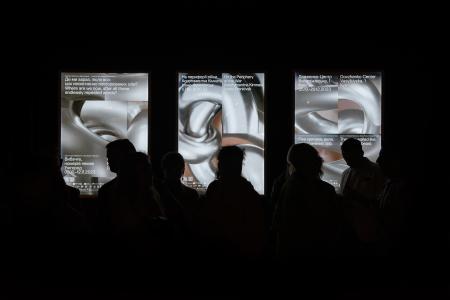
2024Visual narrative, art direction for Kyiv Perennial Visual Culture Research Center Berlin, Germany A cohesive graphic narrative and visual communication were developed for the Kyiv Perennial project, encompassing four exhibitions and a public program. Сonceived by the Visual Culture Research Center (VCRC), the institutional organizer of the Kyiv Biennial, together with nGbK, Between Bridges, and Prater Galerie in Berlin in 2024, Kyiv Perennial follows-up to the pan-European edition of the 2023 Kyiv Biennial with dispersed exhibitions and public programs in a number of Ukrainian and EU cities. Kyiv Perennial’s strategy is based on approaches that merge artistic production, critical knowledge, and social engagement in a state of emergency, and is defined by the struggles that Ukrainian society is engaged in while fighting against Russia’s fascist invasion and a neo-colonial war of extermination and extraction. 2023.kyivbiennial.org/eng/program/kyiv-perennial finished
-
2024Pochen Bienniale Pochen Bienniale Chemnitz, Germany Visual concept for the 4th edition of Pochen Bienniale developped in collboration with Aliona Ciobanu. The visual identity reflects on the curatorial concept of the 'Fire Coming from the East'. It's burning – whether the fire warms or destroys you depends on the distance. "Today, it is the fire which comes after the cold Enlightment and after the smoke of a proletarian dream – fire makes a picture sharper and feelings more vivid, marking presence on one's skin. It leads to far more immediate consequences than its romantic predecessors. It moves quickly. The distance is the key – will it warm or burn you up? Not yet visible over the Carpathians, it comes to United Europe in a form of gaslight –the burning fossils are dead, though they tend to return as bombs and specters. In the 21st century, fire, probably more than ever, has become an imminent tool of politics – from burning tires in the Maidan to the self-immolation of Aaron Bushnell, burning the Koran in an Arnhem square and setting American flags ablaze in Tehran. Fire provides direct access to political action hidden in the technocratic nature of the modern world. A world that has dedicated so many efforts to domesticating and calculating the effects of fire. Until, one fine day, it was surrendered to flames. As we step into the darkness of a bright screen within the Pochen Biennale, we will gaze into the reflections of the world cast by the upcoming blaze – and welcome artistic research into the current pyropolitics of Europe, the blast of multiple Easts, phosphorescent geographies, gaslit economies, the necropoesis of war and the burning out of the Yalta-Potsdam system. " www.pb2024.eu finished
-
2023Visual narrative, art direction for Kyiv Biennial '23 Kyiv Biennial Kyiv, Vienna, Ukraine As part of the visual communication for Kyiv Biennial '23, a series of posters was developed in collaboration with Aliona Ciobanu for exhibitions held in Kyiv, Ivano-Frankivsk, Uzhhorod, Warsaw, Lublin, Antwerp, and Vienna. Metal wires and knots serve as symbols of transformation and resistance amidst the chaos of an ongoing war. As they morph into various shapes, merge and take on different configurations for each exhibition held in different European cities, they parallel the evolving nature of the Biennale itself. Kyiv Biennial's visual communication weaves together disparate impressions, creating a seamless tapestry of shared artistic manifestation, strength and resilience expressed in the metal knots. 2023.kyivbiennial.org/eng finished
Publications
-
2026KABK Fine Arts Yearbook Catalog Royal Academy of Art The Hague Fine Arts Department of the Royal Academy of Arts The Hague, Netherlands What does it mean to make art at this moment in time, with horrific armed conflicts both far and near, and right-wing winds carrying racism, genderphobia, climate change denial, and devastating cuts in research and education? How can we respond to our time, our place, and to each other through art?
-
2025One Horsepower is More than the Power of One Horse: Letters to the Scientist Book Self-published, Amsterdam Alexandra Hunts Amsterdam , Netherlands Letters by Alexandra Hunts. Design by Stefaniia Bodnia
-
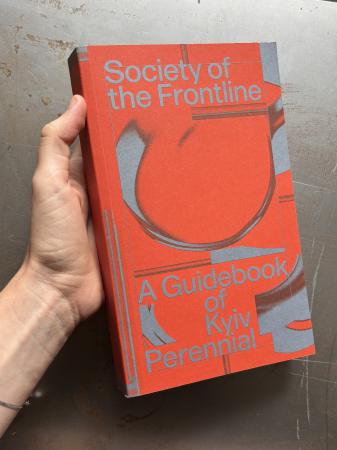
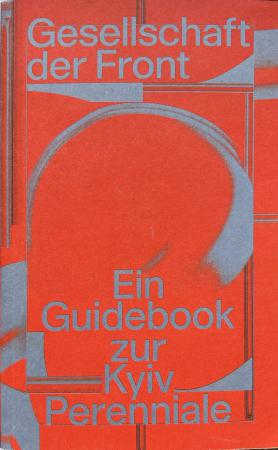
2025Society of the Frontline: A Guidebook of Kyiv Perennial Book nGbK Vasyl Cherepanyn Berlin, Germany ngbk.de/en/shop/publikationen/11-gesellschaft-der-front In Ukraine, Russia’s invasion has spurred a profound new wave of investigative, research-driven, and documentary practices. Stemming from the visual and discursive programs of the 2024 Kyiv Biennial in Berlin, a new publication brings together a selection of these approaches. In texts that grapple with survival environments, the destruction of architectural heritage, and the mass psychopolitical devastation suffered by Ukrainian society, the publication sheds light on the brutal realities of a neocolonial war of extermination and exploitation. It amplifies urgent calls for decolonization, bears witness to war zone atrocities, and highlights acts of refuge and solidarity. Contributions from researchers, artists, journalists, and activists-from Ukraine and beyond-ask a vital question: how can artistic creation, critical inquiry, and social engagement converge to forge a radically different future?
-
2025If we learn from the past Poster Royal Academy of Art The Hague Stefaniia Bodnia, Aliona Ciobanu The Hague, Netherlands If we learn from the past’ suggests attuning ourselves to history as a knowledge of time. Aluminium conceals time, voices and histories. It’s one of the most widely used materials in infrastructure, but also in military and ammo. We took melting as the main methodology to reshape the narrative and bring material to the new action. Stefaniia developed lettering based on the properties of the material, using ligatures to connect all the letters formed by the process. We used aluminium scrap power cables for the production of the casting piece. In Ukraine, where there is only three hours of electricity per day, these cables play a crucial role in establishing connections.
-
2024Coal Mine, Land Mine, Body of Mine Book Self-published, Den Haag Stefaniia Bodnia The Hague, Netherlands This book explores the history of mining and industrialisation in the Donetsk and Luhansk regions of Ukraine. It draws on a rich collection of images and documents sourced from Belgian and Ukrainian archives, including paintings, drawings, and grassroots photography. Among the featured works are Nikolay Kasatkin’s 1880s paintings of Donbas coal mining, which vividly portray the industrial transformation and the hidden, subterranean world where mining takes place, beyond the reach of human vision. Kasatkin paints the picture black, withholding the vision of the industrial workforce and political decisions. In this publication, the invisible voices of those reduced to mere material are brought to light, using my body as a narrative tool. Through a combination of poetry and charcoal drawings, the body is portrayed as more than just a resource, with the narrative unfolding as a piece of charcoal gradually exhausted across the pages.
-
2023Revival of Behind the State Capitol or Cincinnati Pike Book Self-published, Den Haag Stefaniia Bodnia The Hague, Netherlands John Wieners's Behind the State Capitol or Cincinnati Pike is one of the lost texts of North American queer poetry. This publication is an attempt to reconnect with the original by reading, touching, responding and finding new meaning between the lines. This book is a kind of experience, a score made up of another way of reading a poem inside of the original one, erasing some words, and constructing new interpretations. The process of combining resonates with the story of the original typesetting: in the initial book version, typeset on a Compugraphic machine, the text literally vanished in the hot and humid summer weather. Behind the State Capitol was retyped in 1975 on an IBM machine, creating a series of chance linebreaks. The random and jumpy quality provided interesting textures in the text and broke the boundary between 'intentional' and 'unintentional' mistakes. 'Mistakes in grammar, punctuation and spelling: (surrendered, for surrendered) are intentional, or absolute as this is what the poem demanded. That is true to the experience of the poem' – Wieners wrote to publisher Robert Wilson. This revived publication is based on an examination of the medium of the poem, rhythm, white space, acoustic and haptic characteristics of the words on the paper reproduced in two interpretations: Wieners' and the editor's. The reading of the poems recalls a palimpsest. Each spread stages a sort of gentle interplay between Wieners' and the editor's voice; between the fading image-poem form and an emerging so-called experienced one. The paired images hidden in the French folding feel rough, layering the original and the interpretation. Light and heavier, grayish types of paper alternate in different rhythms and voices of the content. The repetitive comparison of authentic and experienced poetry directs the dynamics of linear narration of two voices throughout the book. The translation of Behind the State Capitol is an experience of reading and connecting turned into a collaboration in which the lines, words, sounds and spaces act together.
Awards and grants
-
2025INTL Creative Award, Graphic design, Editorial & Print International Creative Award Glassgow, United Kingdom
-
2025NewOne Awards design live China
-
2025DummyAward '25 ThePhotoBook Museum Cologne, Germany "Coal Mine, Land Mine, The Body of Mine" is shortlisted for the Dummy Award '25
-
2025TDC '71 Type Directors Club United States "SeaSummer" typeface collaboratively designed with Celine Hurka received TDC award. Established in 1953, the TDC competition is the longest running, most prestigious, global typography and type design competition.
-
2021Holland Scholarship Holland Scholarship The Hague, Netherlands