-
 info
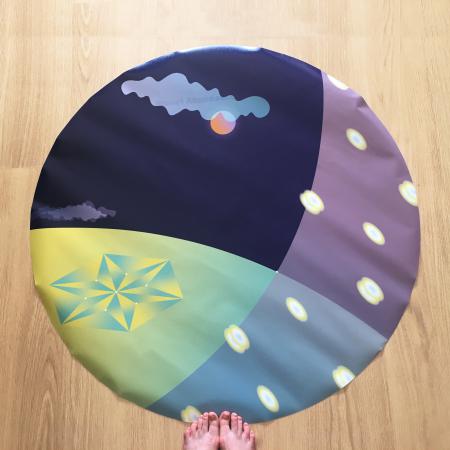
infoPlanet Abundance sound piece, as exhibited at the festival ‘Who owns the economy?’ in Willem Twee Art Space, Den Bosch.
-
 info
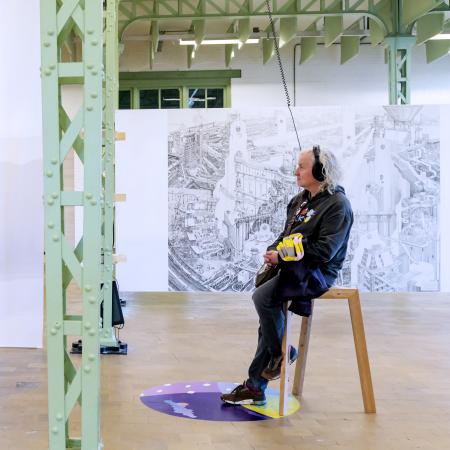
infoPlanet Abundance sound piece, as exhibited at the festival ‘Who owns the economy?’ in Willem Twee Art Space, Den Bosch.
-
 info
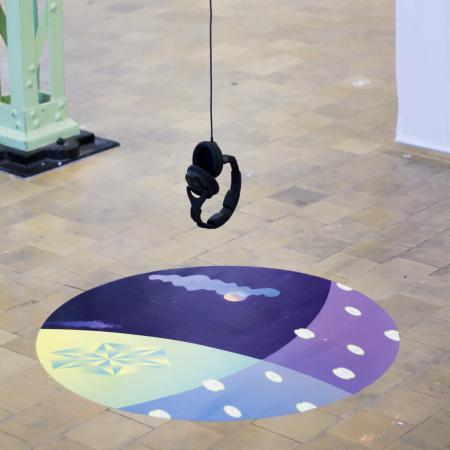
infoPlanet Abundance sound piece, as exhibited at the festival ‘Who owns the economy?’ in Willem Twee Art Space, Den Bosch.
-
 info
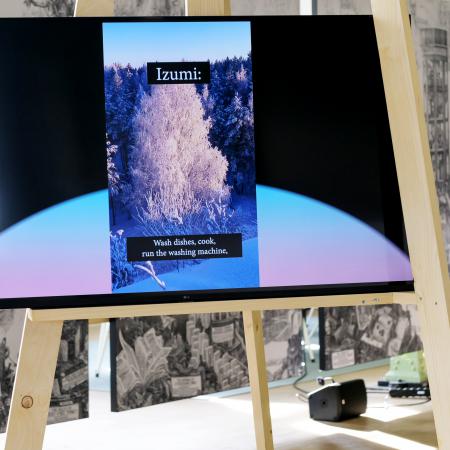
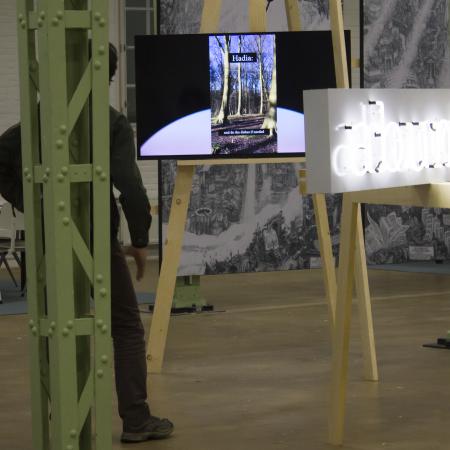
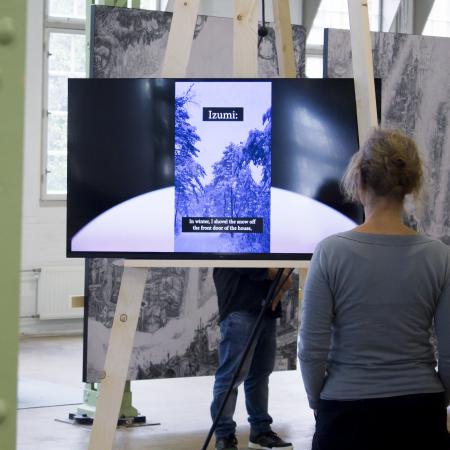
infoOIKOTOPIA video piece, as exhibited at the festival ‘Who owns the economy?’ in Willem Twee Art Space, Den Bosch.
-
 info
infoOIKOTOPIA video piece, as exhibited at the festival ‘Who owns the economy?’ in Willem Twee Art Space, Den Bosch.
-
 info
infoOIKOTOPIA video piece, as exhibited at the festival ‘Who owns the economy?’ in Willem Twee Art Space, Den Bosch.
-
Planet Abundance narrationinfo
Recording of Teresa Feldmann reading her sci-fi script Planet Abundance. This narration was played aloud to the participants in Planet Abundance workshops (2022) as a meditative/contemplative introduction to an imagination exercise and a discussion that followed. Long version can be listened here: https://soundcloud.com/feminist-exchanges/planetabundance-elsa-caucus-fen-new-mix
-
info
From Greek: oikos (household) + topos (place) Portal opens to a planet. What is happening there? We’re possibly witnessing a utopia. But utopia translates literally as ‘no place’ (ou topos), meaning a non-existent society. These stories, however, happen here and now. They elevate care for home and extend this feeling/sense/practice to a planetary scale. It’s no utopia but care as the basic economy being visible. This meditative artwork combines audio recordings collected in 2021 with soothing nature views from an undisclosed place and time. Experience the voicing, listing, reasoning, and reflecting on care labour. In OIKOTOPIA, it is perfectly normal to talk about caregiving, there’s no sense of engaging in something unskilled or trivial. There’s no financial hardship in shouldering care responsibilities. It is fully evident that by caring one creates and releases abundance into the world. Reciprocally, one can enjoy this collectively created abundance without getting stuck in bureaucracy or politics of deserving-undeserving.
-
 info
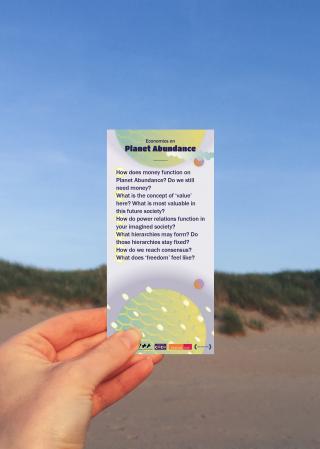
infoOne of the three Planet Abundance workshop cards with guiding questions. I created this particular one to help initiate conversations about what economics could look like in our imagined post-work society.
-
 info
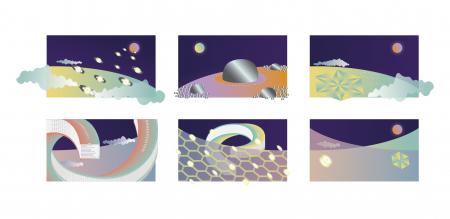
infoSix illustrations, corresponding to each chapter of the science fiction script “Planet Abundance: a feminist economist vision of a post-work society”. The chapters are (from top left to bottom right): The Great Exodus; Planet Scarcity; Planet Abundance; Bank of Care; Feminist Money; Caring Post-Work Society.
-
 info
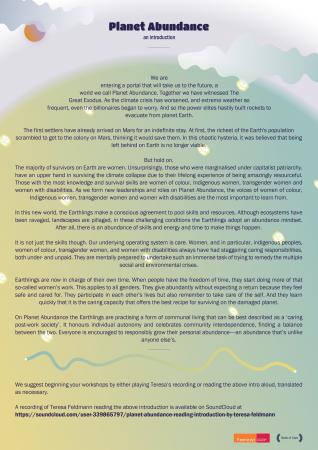
infoThe sci-fi script “Planet Abundance: a feminist economist vision of a post-work society”—an illustrated page taken from the workshop guide we developed.
-
 info
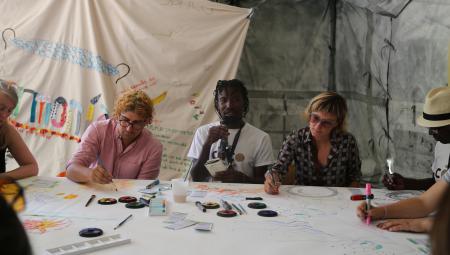
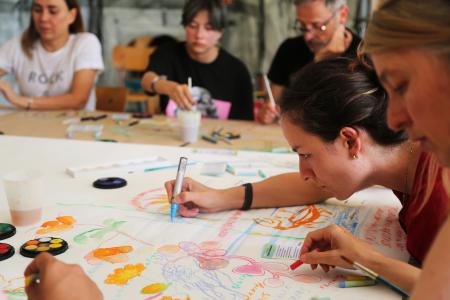
infoThe first of our Planet Abundance workshops was delivered at Documenta 15 in Kassel, Germany, in June 2022.
-
 info
infoThe first of our Planet Abundance workshops was delivered at Documenta 15 in Kassel, Germany, in June 2022.
-
 info
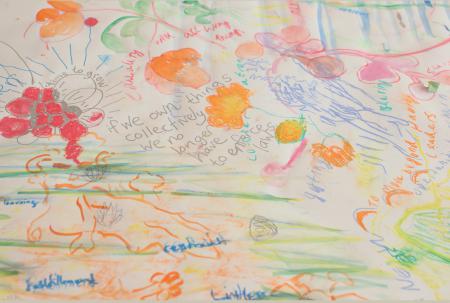
infoDetail of the large collective drawing created during the Planet Abundance workshop at Documenta 15.
-
 info
infoDetail of the large collective drawing created during the Planet Abundance workshop at Documenta 15.
-
 info
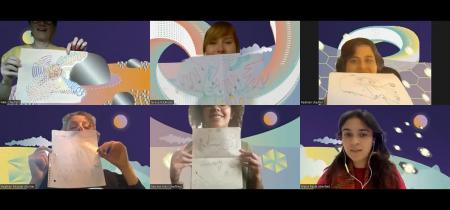
infoScreenshot of Planet Abundance online event in Oct 2022. After all the local workshops had taken place, we invited the artists and facilitators for a collective sharing session online. Being based in the Netherlands, Scotland, Colombia, Canada, Japan, and India, the online event enabled us to gather in one space, to get to know each other, and to offer and exchange visions of life on Planet Abundance, a post-work future world centred on the experiences of women.
-
 info
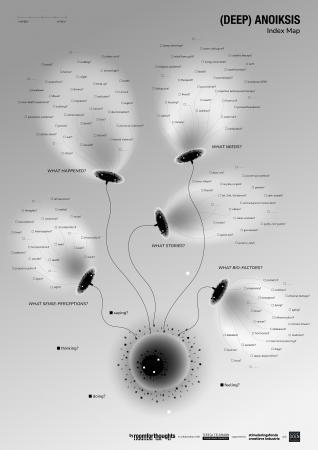
infoThe Anoiksis Index Map is a beginner’s guide to the Anoiksis Theory, that helps the user get started with drawing their own mental map. It is a poster that contains a variety of labels and examples to choose from, offering the user the word tools to express their situations past and present.
-
 info
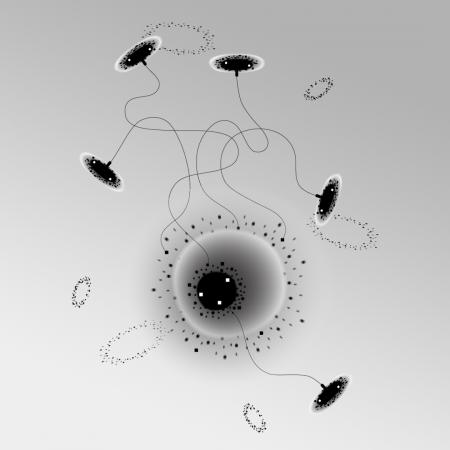
infoAnoiksis image: what stories? “We rely so heavily on our senses that it does not occur to us to question them. Instead, we create stories, even if that story seems unusual because it supports our experience. We can learn to distinguish metaphorical significance from what may feel like a literal truth.” — Dr Jennifer Kanary
-
 info
infoAnoiksis image
-
 info
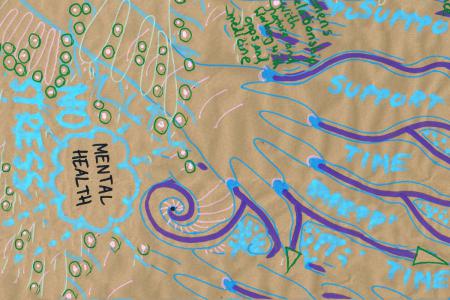
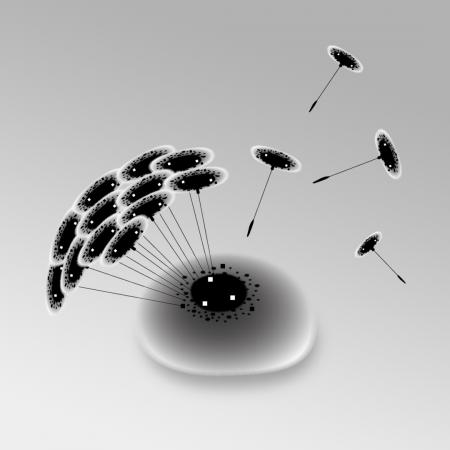
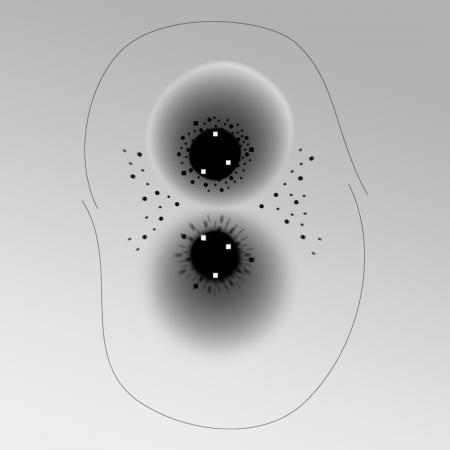
infoAnoiksis image—the meaning of the bulbous figure is in the eye of the beholder: it has been described as an inward-looking eye, a portal, an organ, a breast, a celestial body, a friendly alien. It holds space for a person's subjective experiences.
-
 info
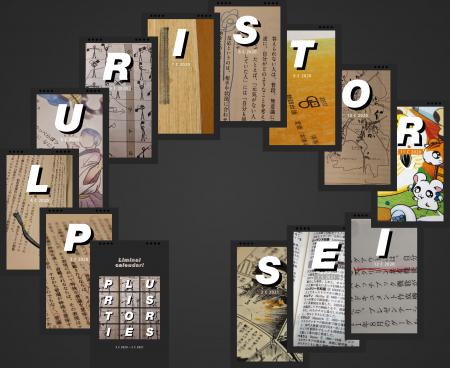
infoPluristories is inspired by the herstory concept, and thus questions the structures of history-making. The project aims to contribute to a more inclusive historical understanding of the pandemic era. What will be recorded about the Covid-19 in history textbooks for future generations? What will be erased, ignored, or glossed over? I organised Pluristories into a collection that I call Liminal Calendar. This calendar chronicles the 12 months following the first lockdown not via the biggest headlines in mainstream media but through personal stories of care, relationships, mutual aid, mental health, body image, precarity, and essential work.
-
 info
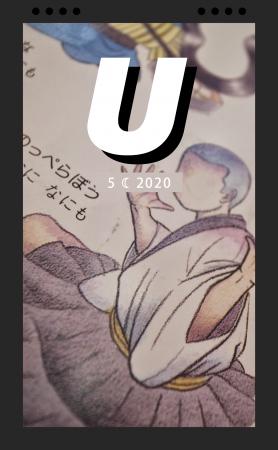
infoDetail of a page from the Liminal Calendar (May 2020)
-
 info
infoCollected stories of care, relationships, mutual aid, mental health, body image, precarity, and essential work that happened during the pandemic time.
-
info
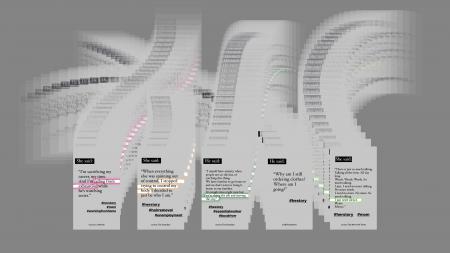
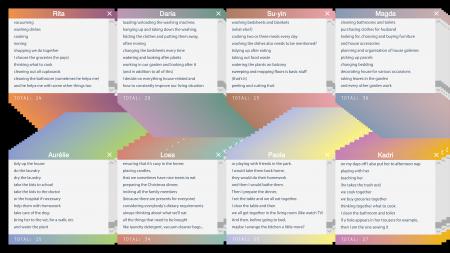
Bank of Care alternative accounting system in action. This audiovisual piece presents multilingual user accounts: experience Rita, Daria, Su-yin, Magda, Aurélie, Loes, Paola, and Kadri (all real people but with changed names) listing their unpaid labour in the home. I reached out to women living in various countries and asked them seemingly a very simple question: to list their routine chores in the home, from housekeeping to childcare. Their stories were echoing each other despite their culturally different surroundings and social class. Their rich, honest, and sometimes humorous audio recordings are the lifeblood of BoC, and are the original inspiration behind this system.
-
info
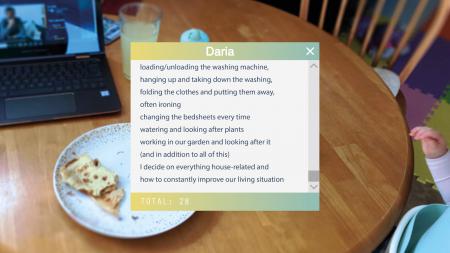
Daria is listing her routine chores in the home, everything from housekeeping to childcare to decision-making. The background image is of her home, too.
-
info
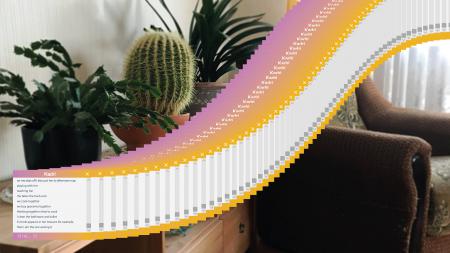
A mini (looping) motion clip experimenting with the concept of collecting and retrieving records of a person’s care work from the digital bank.
-
 info
infoBank of Care (BoC) rethinks the whole economy from the perspective of a caregiver. BoC is an alternative accounting system that keeps track of an individual’s unpaid care work. In a three-step loop, it records caregiving, translates it into readable data, and rewards carers. Members get a detailed overview of their labour in the form of receipts and cumulative statistics. They are creating mounting evidence that this productivity exists. The goal is to introduce care labour into the canon of economics, so that we cannot have an economic discussion without considering the most basic economy.
-
 info
infoBank of Care (BoC) rethinks the whole economy from the perspective of a caregiver. BoC is an alternative accounting system that keeps track of an individual’s unpaid care work. In a three-step loop, it records caregiving, translates it into readable data, and rewards carers. Members get a detailed overview of their labour in the form of receipts and cumulative statistics. They are creating mounting evidence that this productivity exists. The goal is to introduce care labour into the canon of economics, so that we cannot have an economic discussion without considering the most basic economy.
-
 info
infoRita, Daria, Su-yin, Magda, Aurélie, Loes, Paola, and Kadri are all real people who sent me their audio recordings. Names are changed to protect their privacy.
-
 info
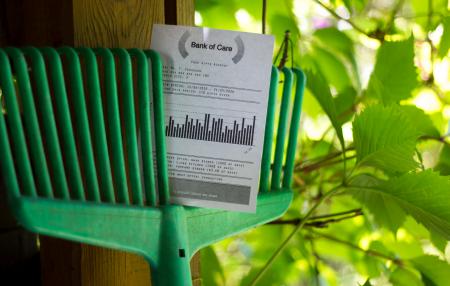
infoBoC members get a detailed overview of their labour in the form of receipts and cumulative statistics. They are creating mounting evidence that this productivity exists.
-
 info
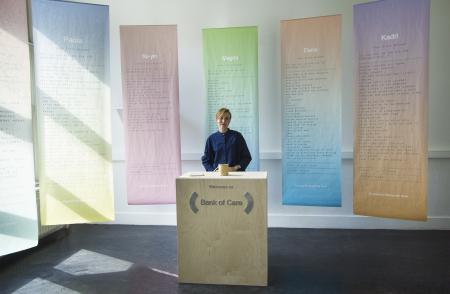
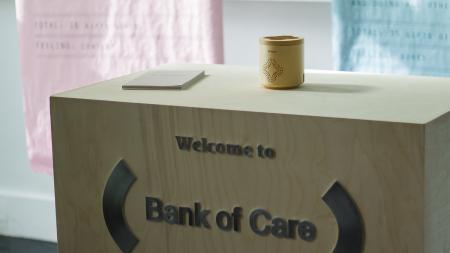
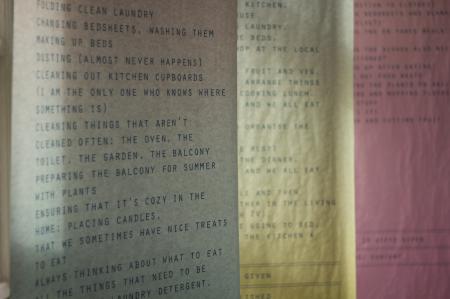
infoBank of Care at the KABK graduation show. The concept was to create a kind of bank experience but not in the usual hierarchical, corporate sense. Instead I aimed to design a space that feels inclusive and egalitarian, but also communicates the mountain of invisible work being done every day in an awe-inspiring way. The setup was carved out of carefully selected materials: a birch plywood counter, brushed aluminium signage, and oversized gradient colour receipts printed on thin, baking-sheet-like paper. Each poster is an individual user account floating in mid-air, symbolising the digital realm where these records can be retrieved from.
-
 info
infoDetail of the Bank of Care exhibition at the KABK graduation show
-
 info
infoDetail of the Bank of Care exhibition at the KABK graduation show
-
 info
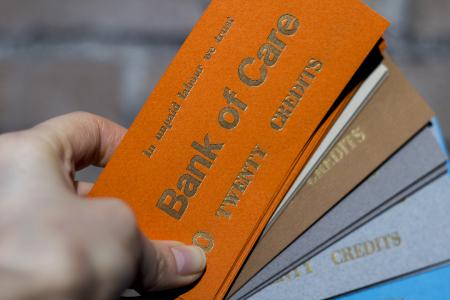
infoDid you know that anybody can create money? It is completely legal. There is actually an incredibly rich world of complementary currencies out there, tucked in local communities. Armed with an old-style letterpress machine, I printed my own Bank of Care currency—to rival the Euro—that addresses the invisibility of unpaid care. The note reads: ‘In unpaid labour we trust.’
-
 info
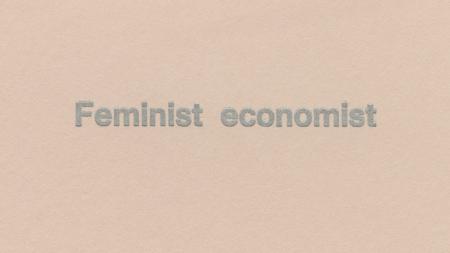
infoHandmade business card for a feminist economist
-
 info
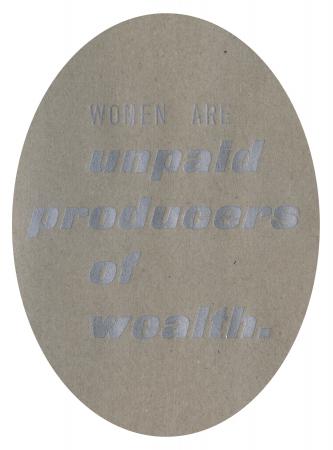
infoSmall handmade poster ‘Women are unpaid producers of wealth’
-
 info
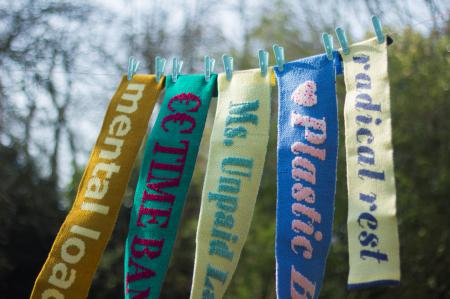
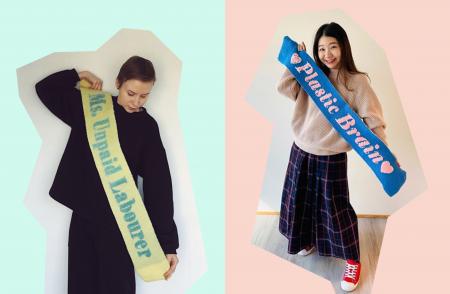
infoThe football scarf collection started as a tongue-in-cheek exercise taking a masculine attire as a canvas to express women issues. This was one of the mixed media experiments I did while working on my thesis, “Ms. Unpaid Labourer” at the KABK. Made with Brother semi-automatic knitting machine. Teams represented: Plastic Brain Ms. Unpaid Labourer TIME BANK Radical Rest Mental Loadd Wear it loud & proud.
-
 info
infoMe and Iris wearing the scarves titled Ms. Unpaid Labourer and Plastic Brain
-
 info
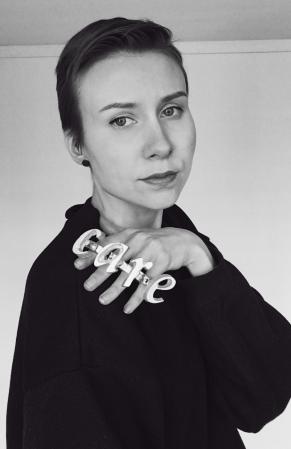
info‘Care’ knuckle duster is another exercise in mutating a masculine attire to carry a feminine message. I can’t remember how this ludicrous idea came about, perhaps I was looking for an excuse to do more sand casting, one of my favourite crafts. The final product—an objet d’art—has elicited joyous responses from many people. Caring has a warm/fluffy/pinkish image in Western culture. Yet care can also be cold/hard/metallic and smack you right in the face. Instead of giving care punches though, I recommend to wear it as a bling. Made of aluminium.
-
 info
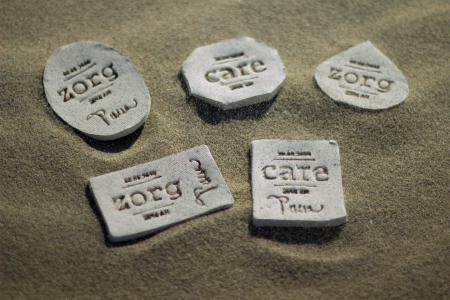
infoAn experiment of making clay tokens that keep (archaic) records of care work, detailing the date, postcode, and signature of the labourer. Inspired by ancient clay tablets that were used to create the world’s first accounts.
-
 info
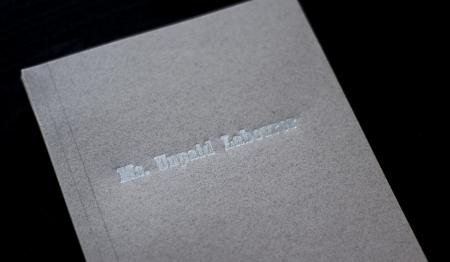
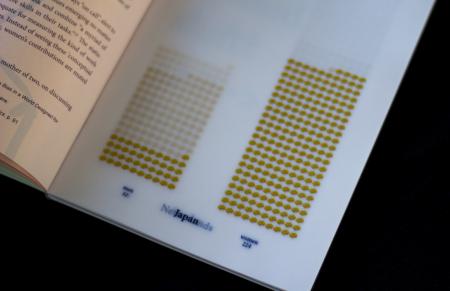
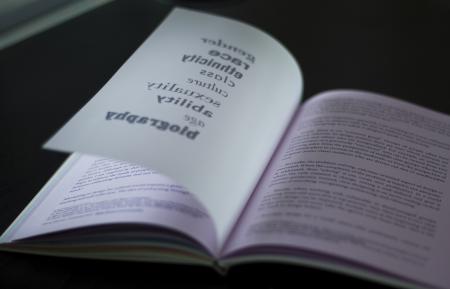
info“Ms. Unpaid Labourer — design perspectives for the ‘conceptually difficult’ work that women do” is the result of a four-month research in the Master Industrial Design programme at the KABK. It sheds light on the gendered division of daily chores, the tremendous commitment and time spent on household work by women worldwide, an obscure and overlooked part of our economic system. In addition to writing it, I produced a satisfyingly tactile ‘book object’. I learned bookbinding and became fascinated with the craft. I handmade several hard copies, experimenting with letterpressing, debossing, inks, powders, fonts, and a variety of papers that would complement my infographics and illustrations. Translucent paper became my favourite as it allowed me to layer up different visual elements. Keeping the cover modest yet tasteful, it reveals surprise contents that are playful, vibrant, and peppered with irony and wit.
-
 info
infoDetail of the book: several layers of translucent paper creates interesting effects with the infographics.
-
 info
infoDetail of the book: a letterpressed translucent page in between text
-
info
In this clip, produced by TextileLab Amsterdam Waag, I introduce my textile design project De Unravel Fabriek, among others.
-
 info
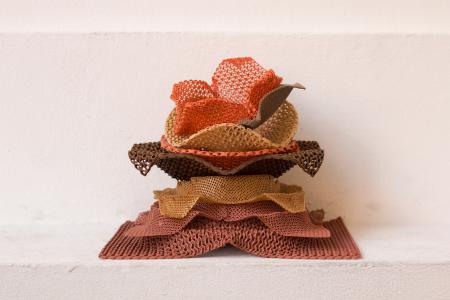
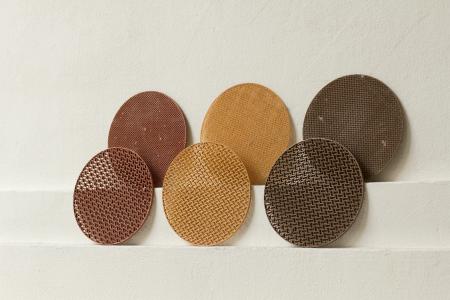
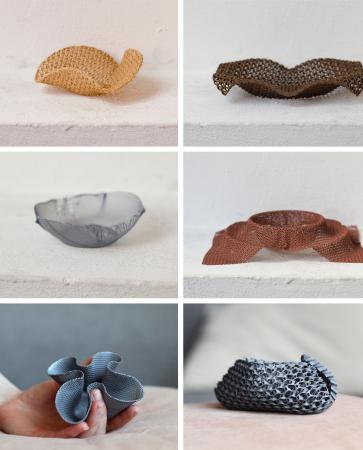
infoI am not into 3D printed gadgets. I was curious what would happen when using additive manufacturing as an in-between step in the making process. Could a 3D print be treated like a piece of plywood or a sheet of steel, where possibilities are open and that lead to unique results? I started printing a new kind of sheet material, half-fabricates, that can be crafted into a desired form later. When heated, these gyroidal PLA sheets become malleable allowing them to be shaped by hand or stretched over a mould. It is the human interplay with material that defines the final design.
-
 info
info3D printed sheets before deforming process
-
 info
infoVarious objects created via heat deforming 3D printed sheets
-
 info
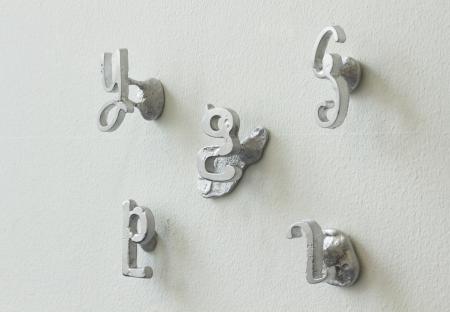
infoA making experiment: fully custom-made aluminium wall hangers. Any letter in any typeface/font is produced as long as it can be 3D printed. Due to the unpredictable nature of the sand casting process, each piece is unique. The pouring channel and excess material blob (that’s normally cut off) forms an attractive mounting base for attaching the letter to the wall. Satin finish.
-
 info
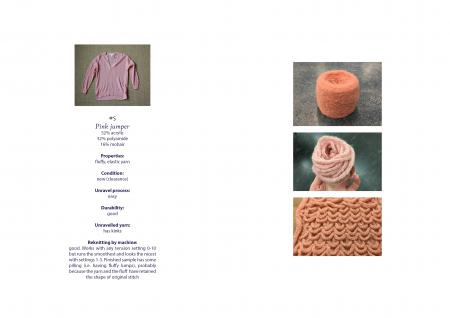
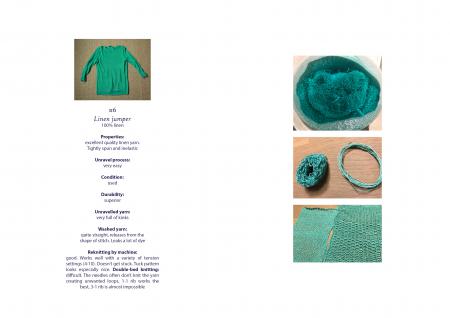
infoDe Unravel Fabriek is a circular business model that salvages unwanted clothing through disassembly. It addresses the shockingly wasteful practices in fast fashion supply chains, specifically dealing with overproduction and unsold stock. The easiest garments to disassemble is knitwear. Unravelling, say, a sweater yields a yarn in its full length that can be rewound into skein. I made samples using a knitting machine. I learned that within certain limits unravelled yarns can be used to remanufacture new garments. I studied each yarn and noted down its properties, durability, how it releases from the stitch, as well as optimal machine settings for reknitting.
-
 info
infoPages from the booklet ‘Study of Unravel’
Websites
personal website
www.bankof.care/personal website
linktr.ee/feldtBehance portfolio
www.behance.net/tereskaeff7c6dartist collective / collaboration on Planet Abundance, 2022
feminist-exchange-network.ailierutherford.com/planet-abundance/Social media
Member of Artists’ Initiative/Collective/Incubator
Feminist Exchange Network
Platform
Planet Abundance
Curriculum vitae
Education
-
Self-taught
-
2021 - 2021Make Economy Yours Again Baltan Laboratories (Eindhoven, NL)
-
2018 - 2020Master Industrial Design Den Haag, Koninklijke Academie van Beeldende Kunsten diploma
-
2008 - 2012Bachelor Product Design Edinburgh Napier University diploma
exhibitions
-
2023Digital Decarb Castlefield Gallery Manchester / online, United Kingdom “As the climate emergency deepens, decarbonisation has never been more urgent. Digital is an important part of the decarbonisation equation; on the one hand, working digitally can help us move away from carbon-intensive travel–on the other, digital technologies and media come with social and environmental costs, such as the impacts of server farms, that are often hidden from users. The arts, creative and cultural sectors have become increasingly characterised by carbon-intensive international movement and air travel. However these sectors regularly create space for fresh perspectives and approaches, and a shift is underway. Artists, independent creatives and institutions are increasingly looking for more regenerative ways to create and work whilst intervening in the developing ecological emergency. Dani Admiss, Teresa Feldmann and Heidi Nikolaisen will focus on the regenerative potential and pitfalls of working at a distance digitally. Looking at aspects including the various modes of digital working, the different types of emotional labour required and the impact of infrastructure such as server farms, the panel will discuss what working digitally makes possible and the environmental impacts we need to consider.” www.castlefieldgallery.co.uk/event/digital-decarb/ Group
-
2023Who owns the economy? Willem Twee Art Space Den Bosch, Netherlands Everyone is part of the economy, but does the economy truly belong to us? And who determines the rules? The works in the exhibition at Willem Twee explore these questions from various perspectives; Klaas Burger explores whether a fair temp agency has a right to exist, Carlijn Kingma reveals the functioning of our monetary system, Oddkin raises awareness about the impact of our voices on the economy, Otobong Nkanga questions our relationship with the environment, artist and hacker Paola Cirio accuses companies of crimes against nature, designer Teresa Feldmann explores how a world led by diversity can lead to the restoration of the Earth. Arne Hendriks investigates how we can downsize abundance, and the Exchange project experiments with alternative forms of exchange for a new economy. futureofwork.nl/english/participants/teresa-feldmann Group
-
2022Planet Abundance Documenta 15 Kassel, Germany The first of our Planet Abundance workshops was delivered at Documenta Fifteen in Kassel, Germany by artists Ailie Rutherford (Scotland), Teresa Feldmann (Netherlands) and COCO Collective (Colombia) in June 2022. Planet Abundance is a series of artist-led interlocal workshops to imagine a world where billionaires and current power elites have left Earth, leaving behind a world led by women. In this feminist economics science fiction and vision of post-work societies, we collectively organise planetary and people care through feminist economic principles. This science fiction scenario conceived by Teresa Feldmann is a world now freed from the once dominant ethos of greed and competition where Earthlings adopt a feminist abundance mindset, finding new and old ways to work together in repairing their world. As the climate crisis unfolds and people become increasingly aware of the devastating impacts of on-going capitalism, it is vital that we find ways to retain the hope and optimism that a different world is possible. We believe that art and creative practice can provide a way to see hope in the dark, to find new strength in collaboration and shift our thinking beyond patriarchal and capitalist norms. documenta-fifteen.de/en/calendar/planet-abundance/ Group
-
2020Bank of Care Dutch Design Week online, Netherlands My graduation project Bank of Care was one of the four student projects representing the KABK at the Dutch Design Week ‘20. In this entirely online festival, the Dutch Design Foundation included my project in the virtual route of ‘Designing Society: how can we use design to serve the needs of society?’ I was also one of the six designers in the theme ‘Designing for Society’, invited to a digital networking event organised by What if Lab. ddw.nl/en/programme/3900/bank-of-care Group
-
2020Bank of Care The Royal Academy of Art The Hague, Netherlands Bank of Care at the KABK graduation show. The concept was to create a kind of bank experience but not in the usual hierarchical, corporate sense. Instead I aimed to design a space that feels inclusive and egalitarian, but also communicates the mountain of invisible work being done every day in an awe-inspiring way. The setup was carved out of carefully selected materials: a birch plywood counter, brushed aluminium signage, and oversized gradient colour receipts printed on thin, baking-sheet-like paper. Each poster was an individual user account floating in mid-air, symbolising the digital realm where these records can be retrieved from. The interplay with the natural light from windows was an important, although unpredictable, aspect as well. The visitors interacted with the setup: they recognised these universal stories, chuckled to themselves, and sometimes (unknowingly) stole some artefacts. A person came into my space and upon seeing the posters asked me: “Are these poems?!” I never thought of it that way but it is sort of true! www.behance.net/gallery/105458141/BoC-exhibition Group
-
2019Exploring materials & materiality Dutch Design Week @ Veemgebouw Eindhoven, Netherlands “TextileLab Amsterdam shapes the world of material research through a collaborative, open source approach, to create more sustainable alternatives to today’s material and production flows. During Dutch Design Week, we work together with students of the Master Industrial Design (KABK) and showcase different open source, collaborative research projects. These projects aim to create more sustainable alternatives to today’s material and production flows. Materials become the ground for shaping new realities.” I exhibited my textile design project De Unravel Fabriek. waag.org/en/event/exploring-materials-materiality Group
-
2019Exploring new paths in the textile industry De Waag Amsterdam Amsterdam, Netherlands “Students of the Master Industrial Design (MID, KABK) present an exhibition with work resulting from the Fabrics and Fabrications programme, a collaboration between MID and TextileLab Amsterdam Waag. The students developed designs that deal with the well-being of people and the planet and they explored disruptive approaches, searching for alternative models for production processes and business strategies. The evening with talks & exhibition on creative research, speculative design, sustainability and social innovation in the field of fashion, textiles and materials was hosted by Maaike Roozenburg head of the Master Industrial Design department at the KABK and took place at Waag in Amsterdam.” I exhibited and gave a talk about my textile design project De Unravel Fabriek. www.kabk.nl/en/events/mid-x-waag-exploring-new-paths-in-the-textile-industry Group
-
2019How can digital manufacturing bring about a better world? Brightlands Chemelot Campus Sittard-Geleen, Netherlands “In 2019 the Master Industrial Design collaborated with Brightlands Chemelot Campus a ‘creative breeding ground for innovation in smart materials and sustainable manufacturing’. Using Brightlands’ high tech machinery, technical know-how and academic expertise, MID students researched relevant and topical implementations of new technologies and materials under the guidance of Dries Verbruggen of Unfold.” I presented my project Mimicking the Bio and won a second prize for the jury award. www.kabk.nl/agenda/presentation-of-master-industrial-design-students-on-the-future-of-industrial-production Group
Projects
-
2023
Bank of Care The Hague, Netherlands www.bankof.care/ Bank of Care (BoC) started with the premise that ‘time is money’. So if time spent on unpaid chores were money too, then I’ve accumulated a hefty sum on my account. Where is the money? No joking, why is it that the more caring responsibilities one has, the more likely one is to struggle economically (or be dependent on someone else’s income)? Who or what has normalised this globally occurring phenomenon that is rarely challenged? The truth is women are the unpaid producers of wealth. The non-market production in households that invisibly maintains the rest of the economy is ignored by world governments, by trade, and is excluded from the canon of economics. Rather conveniently however, they all rely on its wealth-producing capacity. Bank of Care is an ongoing artistic research and an evolving concept. BoC is an umbrella term that Teresa uses to bundle her study of unpaid care labour and how these plural activities sustain society and the economy. BoC engages in new forms of data collection and aims to create a value system that prioritises care. This women-led economy holds the key to habitable, hopeful futures.
-
2022
Planet Abundance Feminist Exchange Network The Hague / Glasgow, Netherlands feminist-exchange-network.ailierutherford.com/planet-abundance/ (Out of frustration) I wrote a science fiction script “Planet Abundance: a feminist economist vision of a post-work society”. It begins with The Great Exodus where the current power elites have evacuated to colonise Mars, leaving the survivors on Earth to care for a damaged planet. Led by women of colour, transgender women, and Indigenous peoples, the Earthlings adopt an abundance mindset, finding new and old ways to work together in repairing their world. In collaboration with artist Ailie Rutherford (Scotland), Planet Abundance is put into practice as a series of artist-led interlocal workshops, where the sci-fi script is used as a point of departure. In this shared vision of post-work societies, we move beyond scarcity to collectively organise planetary and people care through feminist economic principles. We invited a diverse pool of artists and facilitators based in Scotland, India, Japan, Colombia, and Canada to run collective imagination workshops to help us build a shared vision of Planet Abundance. As we find ourselves in the midst of multiple social, economic and environmental crises and the devastating impacts of capitalism are impossible to ignore, collaborative world building and speculative fictions are a way to see beyond patriarchal and colonial norms, to retain optimism that a different world is possible. It is this optimism that allows us to keep working together towards a better future. The first of our Planet Abundance workshops was delivered at Documenta Fifteen in Kassel, Germany.
-
2022
The Anoiksis Map Roomforthoughts Amsterdam, Netherlands medium.com/beyond-diagnosis-the-anoiksis-chronicles/beyond-diagnosis-making-sense-of-psychosis-e32a6aeae308 In collaboration with Dr Jennifer Kanary of Roomforthoughts in Amsterdam, we introduce the word ‘Anoiksis’ into daily vocabulary, to have better conversations about experiences of (di)stress. The fascinating Anoiksis Theory, as developed by Dr Kanary, invites us to attend to our mental health through a mapping exercise. What we “objectively” deem as true/false is not so important here. Instead the aim of the Anoiksis Map is to understand our (unmet) needs, through connecting experiences to sense-perceptions, to stories, to bio-factors. And in the process become (more) trauma-informed. I had the pleasure to design the visual identity of Anoiksis. The challenge was to create a series of evocative images that would represent the organic complexity of the Anoiksis Theory. The identity contains several graphic elements that can be mixed and layered to create endless possibilities for future uses. The meaning of the Anoiksis image is in the eye of the beholder: it has been described as an inward-looking eye, a portal, an organ, a breast, a celestial body, a friendly alien. It holds space for a person's subjective experiences.
-
2021
Pluristories Arts Initiative Tokyo The Hague / Tokyo, Netherlands www.baltanlaboratories.org/library/the-liminal-space-teresa-feldman Pluristories was developed during the Liminal Space residency. I interpreted the theme of liminality in terms of unlearning lessons. I used the liminal state as an opportunity to question the structures of history-making. What will be recorded about the Covid-19 in history textbooks for future generations? What will be erased, ignored, or glossed over? Inspired by the herstory concept, the project Pluristories aims to contribute to a more inclusive historical understanding of the pandemic era. I organised Pluristories into a collection that I call Liminal Calendar. This calendar chronicles the 12 months following the first lockdown not via the biggest headlines in mainstream media but through personal stories of care, relationships, mutual aid, mental health, body image, precarity, and essential work.
-
2019
De Unravel Fabriek Royal Academy of Art The Hague The Hague, Netherlands www.behance.net/gallery/86996933/The-Unravel-System De Unravel Fabriek is a circular business model that salvages unwanted clothing through disassembly. It addresses the shockingly wasteful practices in fast fashion supply chains, specifically dealing with overproduction and unsold stock. The easiest garments to disassemble is knitwear. Unravelling, say, a sweater yields a yarn in its full length that can be rewound into skein. I made samples using a knitting machine. I learned that within certain limits unravelled yarns can be used to remanufacture new garments. I studied each yarn and noted down its properties, durability, how it releases from the stitch, as well as optimal machine settings for reknitting. De Unravel Fabriek was exhibited at the Dutch Design Week 2019 and TextileLab Amsterdam (De Waag) in 2019.
International exchanges/Residencies
-
2021Arts Initiative Tokyo Tokyo / The Hague, Japan The Liminal Space Residency was organised by Arts Initiative Tokyo in Japan and Baltan Laboratories in The Netherlands, who invited an artist from Japan and an artist from the Netherlands to collaborate in the digital (liminal) space. Responding to an open call, I was selected as the Dutch artist, and Seira Uchida as the Japanese artist. While working independently in interpreting the theme Liminal Space, we actively shared ideas and networks online, learned about each other’s culture, vlogged, exchanged goods, and organised study groups on Zoom. www.baltanlaboratories.org/library/the-liminal-space-teresa-feldman
Sales/Works in collections
-
2021Feminist football scarves / Typo hooks Several private individuals The Hague (NL) / Taipei (TW) / Tomar (PT), Nederland Several private individuals from different countries (The Hague, Netherlands; Taipei, Taiwan; Tomar, Portugal) acquired pieces of my work: I sold three Feminist football scarves and one Typo hook.
Publications
-
2020Anew #3 Catalog KABK The Hague, Netherlands www.kabk.nl/en/news/anew-3-magazine-by-the-master-industrial-design Publication of the Master Industrial Design programme at the Royal Academy of Art (KABK) September 2020. Anew showcases a collection of projects, interviews and images by first and second-year students, teachers and experts who are all part of the Master Industrial Design team at the KABK. In the third issue of anew magazine we are proud to present our findings from the academic year 2019-2020. My Master thesis features on page 2 (online p. 8). My graduation project features on the ‘Graduates’ wrap-around pages (online p. 46)
-
2019Anew #2: Redesigning Industry Catalog KABK The Hague, Netherlands issuu.com/kabk/docs/ma-industrial-design_anew_2019 Publication of the Master Industrial Design programme at the Royal Academy of Art (KABK) June 2019. My essay “When I altered nature” features on pages 38-39 (online pp. 40-41). Images of several other works of mine feature throughout the publication.
reviews
-
2023Boxes Full of Hope Across the World Website Linda Köke The Hague, Netherlands www.tubelight.nl/dozen-vol-hoop-de-wereld-over%EF%BF%BC/ How physical mail connected two artists in covid time. Almost two years after their residency and the first interview, I speak to Teresa and Seira specifically about this physical exchange, its added value and whether they continued it after their residency.
-
2021THE LIMINAL SPACE RESIDENCY: Teresa Feldmann & Seira Uchida Website Linda Köke Breda, Netherlands airbrabant.nl/en/the-liminal-space-residency-teresa-feldmann-seira-uchida/ How do you achieve a meaningful international collaboration between two artists during Covid times? For the Liminal Space residency, an initiative of Eindhoven-based Baltan Laboratories and Arts Initiative Tokyo, two artists have come together online to share their experiences about what it means to be situated in the liminal space.
Awards and grants
-
2023S+T+ARTS Prize Ars Electronica, Linz Linz, Austria Honorary Mention for Labyrinth Psychotica – The Anoiksis Experiment by Roomforthoughts (NL). Teresa Feldmann is credited in the Main Team section as the graphic designer of the Anoiksis elements.
-
2022The Anoiksis Map Stimuleringsfonds Creatieve Industrie Amsterdam, Netherlands Following an open call, Stimuleringsfonds selected me for the Building Talent programme as a starting maker to collaborate with an experienced agency Roomforthoughts in Amsterdam.
-
2021Bank of Care & Feminist Money Stimuleringsfonds Creatieve Industrie Netherlands I received a starting grant within the Design Grant Scheme
-
2020Royal Academy Master Award KABK awards, Den Haag The Hague, Netherlands Each year, the heads of all courses jointly select the best graduation works to be nominated for the Academy's Master Award. I was nominated for the Master Award 2020.
Secondary art-related activities
-
2023 - 2023Speaker at a masterclass titled ‘Slow Culture as an artistic practice’ at Dartington Arts School, UK.
-
2023 - 2023Speaker at a guest lecture ‘What’s next?’ at KABK, The Hague.
-
2020 - 2020Student editorial staff at magazine Anew, KABK